


Key takeaways
- In an analysis of over 540,000 menstrual cycles, period-tracking methods were compared to an FDA-cleared digital contraceptive.
- Period-tracking methods frequently mislabel fertile days as “safe,” resulting in up to 44 times higher unintended pregnancy risk per cycle compared to digital contraception.
- Regulated digital contraception is designed to account for cycle variability, resulting in better coverage of the full fertile window and reducing unintended pregnancy risk per cycle by 98% compared to the calendar-based method.
Why was this study conducted?
Standalone period-tracking apps and fertility features within broader health platforms are widely used to monitor menstrual cycles and overall wellness. Many display a predicted fertile window, which can create the impression that they can be used to avoid pregnancy [1]. However, these tools are not regulated birth control methods and are not designed or tested for pregnancy prevention.
Digital contraception may also come in the form of an app, but it is regulated, clinically evaluated, and specifically designed to prevent pregnancy.
The disconnect between how period-tracking apps are used and what they are designed to do has been linked to reports of unplanned pregnancies [2]. This study was conducted to compare how period-tracking methods and regulated digital contraception identify fertile days and how the different approaches affect pregnancy risk.
Understanding these distinctions is important for users and healthcare professionals alike. Treating all “fertility apps” as interchangeable can create confusion and unintended risk, underscoring the need for clearer differentiation between wellness tools and regulated contraceptive options.
What was compared?
The analysis, conducted in collaboration with scientists from the University of Oxford and the University of Southern California, among other leading institutions, included over 540,000 cycles from 187,000 Natural Cycles users who consented to research use of their data.
Three approaches were evaluated:
Calendar-based method
Uses period history alone to predict the fertile window.
BBT-supported method
Uses period history and body temperature to predict the fertile window.
NC° Birth Control (FDA-cleared digital contraceptive)
Uses body temperature, period data, and individualized cycle history to determine a daily fertility status.
How is the fertile window defined and displayed?
The fertile window is the six days in each menstrual cycle when pregnancy is biologically possible. This includes the five days before ovulation and the day of ovulation itself [3]. Because ovulation does not occur on the same day every cycle, accurately predicting the fertile window can be challenging.
When period-tracking apps display a fertile window, they typically show a predicted ovulation day along with a fertile window starting five days prior, without accounting for the possibility that ovulation may occur earlier or later than expected. When timing shifts, which is common, some fertile days may be incorrectly labeled as “safe.”
The FDA-cleared digital contraceptive also determines the fertile window but presents it differently. Instead of displaying fertile days based solely on a predetermined ovulation prediction, it evaluates the pregnancy risk of each day individually and adapts to each user’s unique cycle. Using current data, historical patterns, and built-in safety margins, it determines whether pregnancy is possible on that specific day. If uncertainty exists, the method errs on the side of caution and instructs the user to use protection or abstain from intercourse. Because fertility is reassessed daily, it can adapt when ovulation timing changes from cycle to cycle.
How did researchers determine the “true” fertile window?
To fairly compare these methods, the study needed a reliable way to determine when ovulation actually occurred in each cycle.
All cycles included a confirmed LH surge, a biological signal that ovulation will happen within the next 24–48 hours. Using this marker, researchers defined a reference, or “true,” fertile window.
This reference window allowed researchers to measure how accurately each method identified fertile days and how often fertile days were incorrectly labeled as “safe,” resulting in an “at-risk” day.
What are “at-risk days”?
In the analysis, an at-risk day was defined as a day on which a method incorrectly labels a fertile day as “safe.” If someone has unprotected sex on these days, pregnancy can occur.
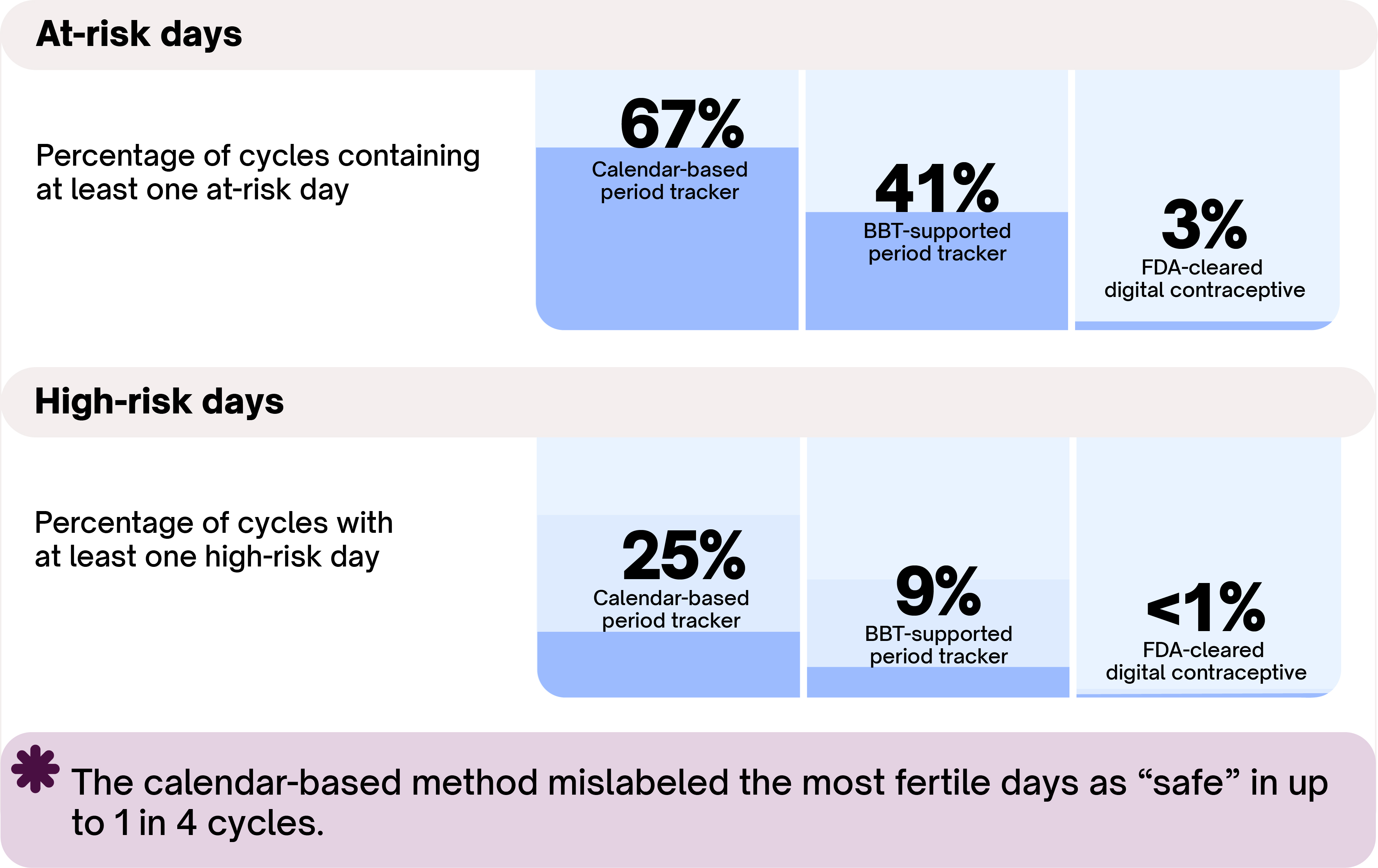
The results showed that with both period-tracking methods, cycles frequently contained at-risk days, where the user is told they aren’t at risk for pregnancy even though they actually are. This happened in almost 7 out of 10 cycles with the calendar-based method, and 4 out of 10 cycles with the BBT-supported method.
Even more concerning, the period-tracking methods often mislabel the two most fertile days when the chance of pregnancy is highest as safe, resulting in “high-risk” days in many cycles.
Are at-risk days more common in irregular cycles?
Irregular cycles make it more difficult to predict ovulation timing, as it may vary more from one cycle to the next.
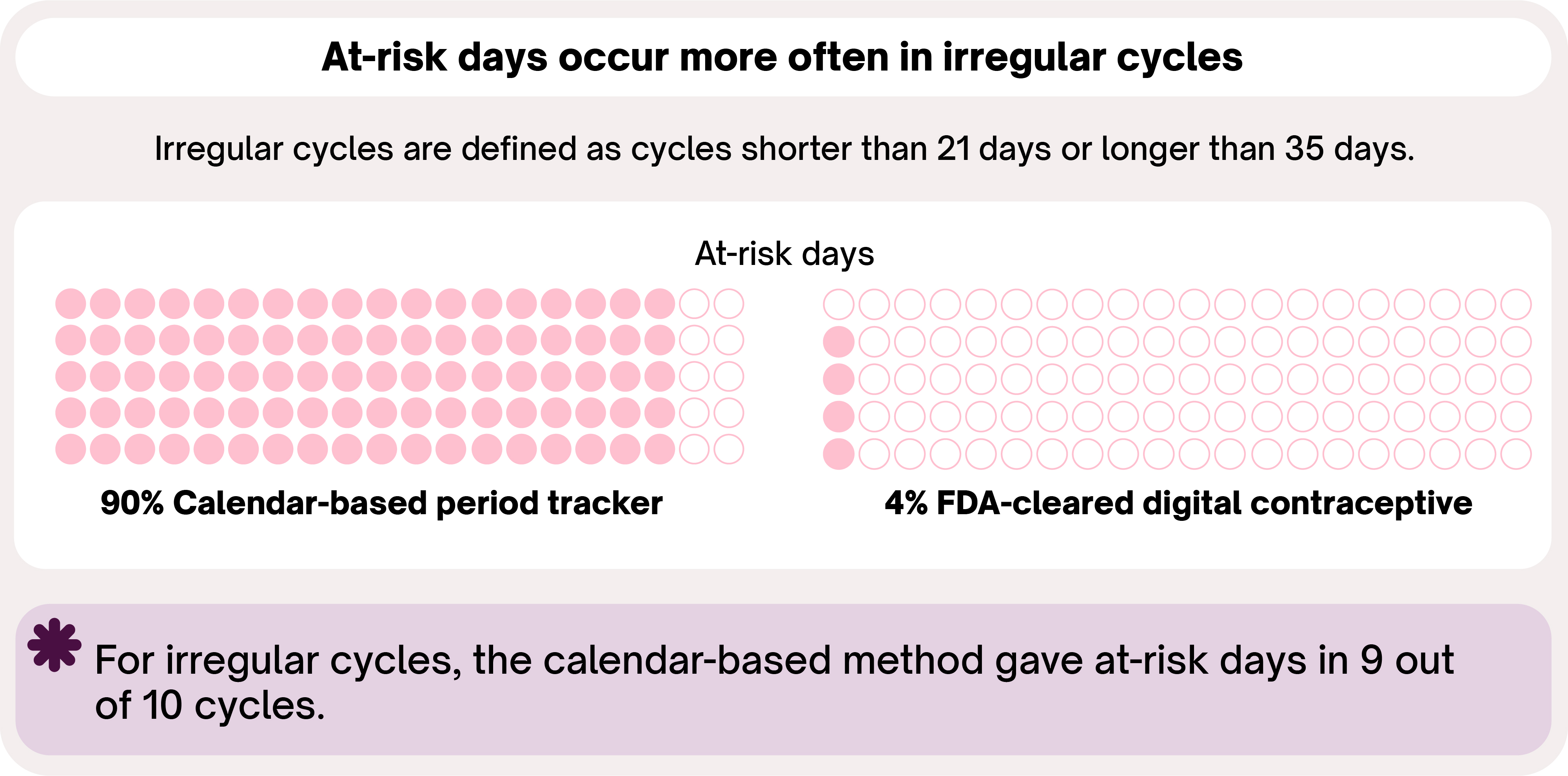
In both period-tracking methods, irregular cycles frequently included at-risk days. The calendar-based method showed at-risk days in as many as 9 out of 10 cycles. The BBT-supported method performed somewhat better, but approximately 1 in 4 irregular cycles still contained at-risk days.
For the FDA-cleared digital contraceptive, the number of at-risk days remained low in irregular cycles, demonstrating that this method effectively covers the fertile window even when ovulation timing varies.
What does this mean for pregnancy risk?
When days in the fertile window are incorrectly labeled as “safe,” it puts the user at risk for an unintended pregnancy. With that in mind, the study also determined the average predicted unintended pregnancy risk per cycle for each method. This calculation took into account the likelihood of conception if a user has unprotected sex on the individual days of the fertile window, and factored in that the risk of pregnancy is higher on the days close to ovulation.
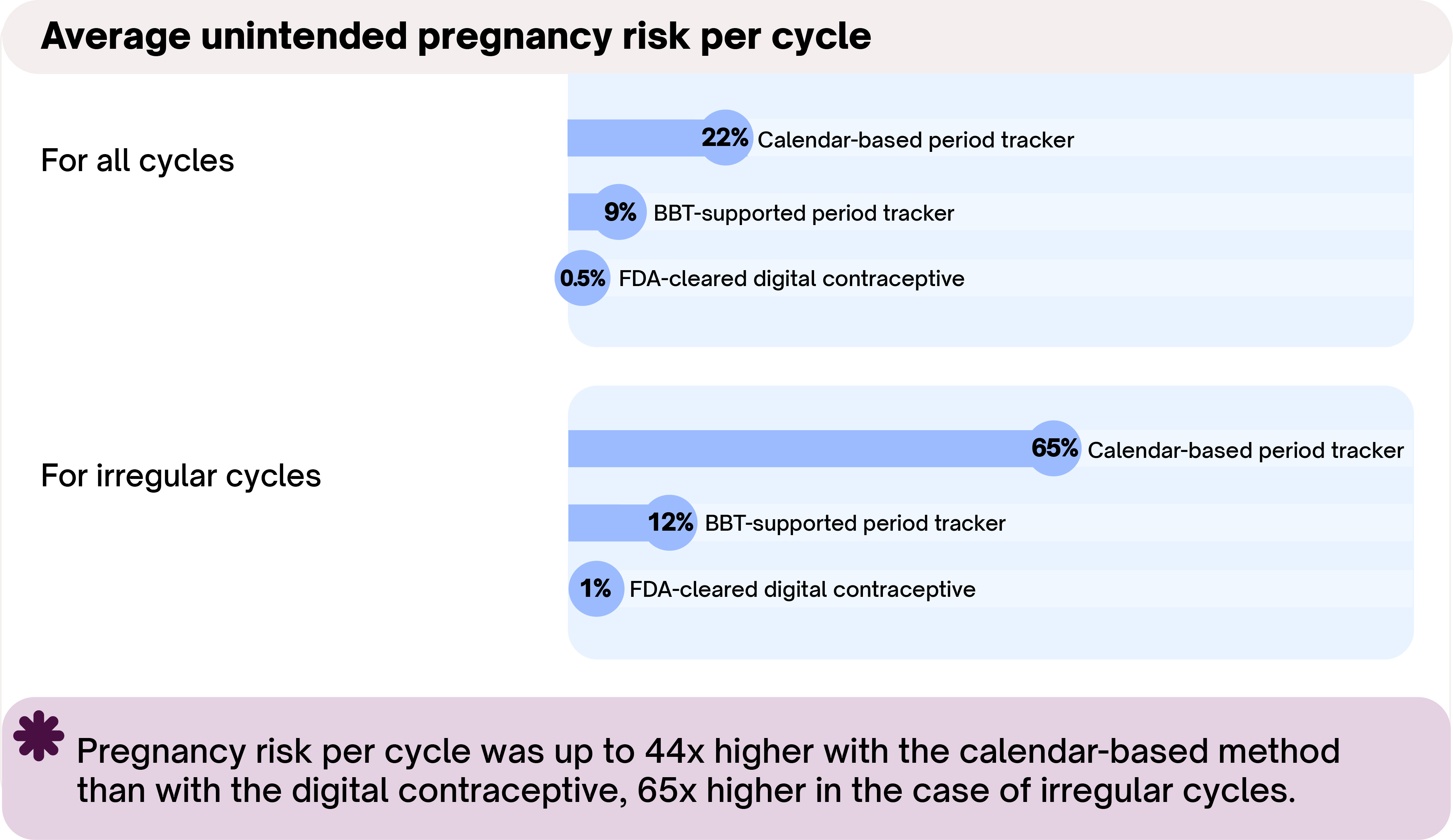
Both period-tracking methods were associated with significantly higher unintended pregnancy risk per cycle compared to the FDA-cleared digital contraceptive. This pattern held true for cycles overall and for irregular cycles specifically.
Unintended pregnancy risk per cycle was reduced by 98% with the FDA-cleared digital contraceptive compared to the calendar-based method, and by 94% compared to the BBT-supported method.
Why does this research matter?
Not all fertility apps are designed to prevent pregnancy. Period-tracking tools and regulated digital contraception serve fundamentally different purposes. Treating them as interchangeable can create confusion and can increase the risk of unintended pregnancy.
The FDA-cleared digital contraceptive is a regulated medical device supported by clinical evidence and regulatory review. It is specifically designed, tested, and authorized for pregnancy prevention. Wellness-focused period trackers are not.
For individuals seeking a safe, non-hormonal birth control option, and for healthcare professionals providing contraceptive counseling, understanding this distinction is essential.
References
- Rampazzo F, Raybould A, Rampazzo P, Barker R, Leasure D. “UPDATE: I’m pregnant!”: Inferring global downloads and reasons for using menstrual tracking apps. Digit Health. 2024;10: 20552076241298315.
- McNee R, McCulloch H, Lohr PA, Glasier A. Self-reported contraceptive method use at conception among patients presenting for abortion in England: a cross-sectional analysis comparing 2018 and 2023. BMJ Sex Reprod Health. 2025;51: 186–190.
- Dunson DB, Baird DD, Wilcox AJ, Weinberg CR. Day-specific probabilities of clinical pregnancy based on two studies with imperfect measures of ovulation. Hum Reprod. 1999;14: 1835–1839.
