Itchy perimenopause skin: Causes, symptoms & how to treat

Dr. Danielle Perro

Agathe van Lamsweerde

Follows NC° Editorial Policy
At Natural Cycles, our mission is to empower you with the knowledge you need to take charge of your health. At Cycle Matters, we create fact-checked, expert-written content that tackles these topics in a compassionate and accessible way. Read more...
- Itchy skin is a common symptom of perimenopause — if you’re experiencing this, you are not alone
- Itchy perimenopause skin is largely driven by changes to your levels of estrogen, a key hormone that helps to maintain skin moisture and elasticity, which decreases during perimenopause
- Itchy skin can be made worse by external factors such as stress, skin irritants, and diet
- There are many home remedies that can help alleviate itchy skin — however, for more severe cases, medical interventions such as hormonal treatments may be recommended by a healthcare professional
Perimenopause, for many, is a period of change, bringing about physical and mood-related symptoms, alongside changes to your period [1]. Perimenopause itchy skin is a less-spoken about symptom, but can be extremely bothersome to those affected. If you’re experiencing itchy skin, know that you’re not alone, and that your experience is valid. You may be wondering what’s causing this uncomfortable experience and how to stop perimenopause itchy skin. Below we’ve outlined how the hormonal changes occurring during perimenopause contribute to changes in the skin, and ways you can alleviate symptoms.
Understanding perimenopausal itchy skin
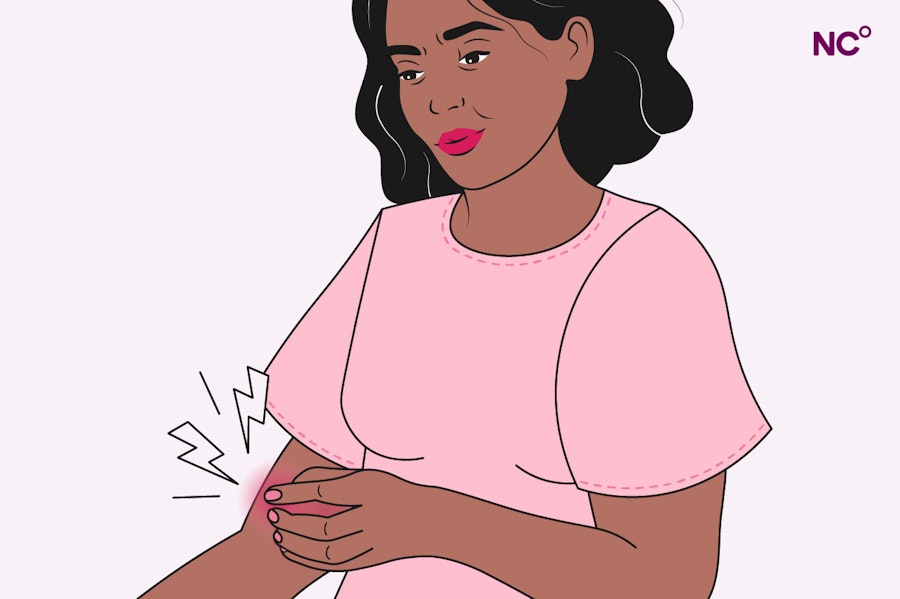
More than 60% of women report a problem with their skin, and more than half of those indicate that menopause was a contributing factor [2].Though there aren’t large-scale epidemiological studies quantifying it yet, perimenopause itchy skin, otherwise known as pruritus, may affect around 50% of those going through perimenopause [3]. It is one of many changes that occur to the skin during perimenopause, and for some, it can feel quite distressing to experience persistent itch. You may also notice other changes to your skin; it may now feel drier and less elastic than it used to be.
Why the itch happens
During perimenopause, there are plenty of changes to your hormones that are going on in the background, which is one of the key drivers behind many of the symptoms you experience. Declining estrogen during perimenopause specifically reduces the production of the skin’s hyaluronic acid, natural oils, and collagen, which are all key players in keeping the skin feeling moist and stretchy. When these decline during perimenopause, it reduces the skin’s natural moisture and elasticity. The loss in collagen also thins the skin, which can contribute to discomfort you might be feeling, by making it feel more fragile, sensitive to external factors and itchy.
[2]
Common areas affected by perimenopause itching
Certain areas of the body which are heavily populated by receptors for the estrogen hormone, may be most commonly affected by perimenopausal skin itching when estrogen levels drop. This includes the face and neck, legs, as well as the vulva. Though it may be surprising, some people also experience itching in their ears throughout perimenopause. [4]
Common triggers of perimenopause itchy skin
Though a hormonally-driven symptom of perimenopause, you may find that there are factors that make your itch worse. You might notice that changes in your environment, lifestyle factors, and what you eat, can exacerbate your itch, which might be distressing. This includes, but is not limited to:
- Environmental factors
- Extreme temperatures and low humidity can make the skin barrier less effective at protecting your skin against different irritants, and contribute to itchy skin [5]
- Lifestyle
- Stress [6] – the relationship between stress and itch can often be bidirectional. Itch in itself can contribute to feelings of stress, and stress contributes to the inflammatory response that makes itch worse [7]
- Skin irritants like detergents or synthetic fibres – common irritants can worsen the feelings of itch [8]
- Diet
- Potential allergens in food may exacerbate feelings of itch [9]
If you’re using Natural Cycles, you can easily log diet and lifestyle trackers to help you make sense of your symptoms during perimenopause
How to stop perimenopausal itching
Since perimenopausal itching is driven by hormones, it may be difficult to completely stop the itching without medical intervention. However, if you find that the itching is bothersome, there are many remedies that may help to manage the itch and alleviate the extent that itchy skin is impacting you day-to-day. Some remedies you can try on your own at home, but in some cases, some extra support from your healthcare provider will be needed.
|
Trigger |
Management technique |
|
Environmental stressor |
Reduce exposure to intense hot or cold, and manage protection against the sun. Keep your local environment, like your house, humid by using a humidifier. |
|
Stress |
Explore factors such as meditation, yoga, light exercise, or other techniques that help you to alleviate your stress. If you are worried about stress and would like support for managing this, we recommend seeking advice from your healthcare professional. |
|
Diet |
Consult with a healthcare professional to understand if there are any dietary factors (ie. spice, dairy or other allergens) that might be making the itch worse. |
|
Hot showers |
Consider bathing in lukewarm or cool showers or baths. Taking baths with colloidal oatmeal may help to soothe dryness as well [10]. |
|
Skin irritants (ie fragranced soaps, irritating fabrics) |
Consider using fragrance-free products, such as soaps, and washing detergents. Focus on keeping your skin moisturized with low-pH emollients. Wear loose-fitting and breathable fabrics that are gentle on your skin. [6] |
[11]
In the event that the perimenopausal skin itch is still bothersome after trying some of the more over-the-counter solutions above, your healthcare provider might offer some medications to help. Some of these treatment options include:
HRT/MHT: Given that perimenopause skin itch is a hormonally driven symptom, hormonal treatments which introduce more of the lacking hormone into your system may help to alleviate some of these symptoms [12]. For example, given that so many estrogen receptors are located on the skin, topical estrogen may be prescribed to be applied directly to the itchy areas.
Antihistamines: If any of your itching is related to allergies, antihistamines may help to alleviate your itch symptoms [13].
Topical Corticosteroids: These may be recommended as a short-term treatment option to reduce inflammation of the skin, and alleviate some of the itchy sensation [14].
Get to know your Symptoms with NC° Perimenopause
Are you going through perimenopause and noticing changes in your skin? If so, you’re not alone, and Natural Cycles is here to support you along the way. With NC° Perimenopause, you can track your symptoms in real-time, and begin to understand what might be triggering them. Learn more about NC° Perimenopause and how Natural Cycles can support you during this period of change.
Did you enjoy reading this article?
Frequently asked questions