Perimenopause breast pain: Causes, symptoms, & how to treat

Iona Nelson

Dr. Danielle Perro

Follows NC° Editorial Policy
At Natural Cycles, our mission is to empower you with the knowledge you need to take charge of your health. At Cycle Matters, we create fact-checked, expert-written content that tackles these topics in a compassionate and accessible way. Read more...
Key takeaways
-
Breast pain, also known as mastalgia, is a common symptom during perimenopause
-
Perimenopause breast pain can be linked to your menstrual cycle and hormones, or caused by other factors such as age-related breast tissue changes
-
Lifestyle factors, bra support, and over-the-counter medication can reduce breast tenderness during perimenopause and increase your comfort
We often associate breast pain with puberty and the menstrual cycle. But what about during perimenopause? Menopause occurs when we have our final period, as determined retrospectively 12 months later [1]. Perimenopause is the time leading up to our last menstrual period, when hormonal changes cause physiological symptoms, which can include breast pain. This article will explain what causes perimenopause breast pain, how common it is, and how to ease breast tenderness during this transition phase.
Is perimenopause breast pain normal?
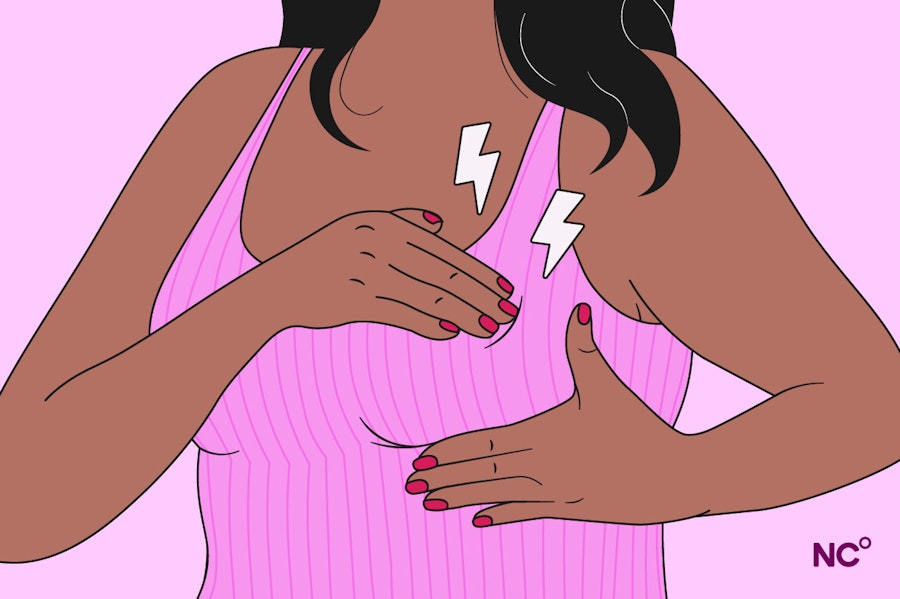
Breast pain, also referred to as mastalgia, during perimenopause is common, but it can feel different to each individual. Your breasts may feel tender, achy, dull, or heavy [2]. Or you may experience a sharper pain, burning, or itching [3]. The pain may also extend to the armpits and can affect one or both breasts [2].
Breast pain is divided into two separate categories: cyclical and non-cyclical. Cyclical breast pain is related to the menstrual cycle and is most common premenopause, affecting around two-thirds of all women who experience breast pain. Non-cyclical breast pain appears unrelated to the menstrual cycle and is more common in perimenopause and those aged 40 and over [4].
Minor cyclical breast pain before your period is classed as a common part of premenstrual syndrome (PMS) for many [5]. Yet, despite the association with breast pain and premenstrual syndrome, some studies have found that cyclical breast pain is most common in women aged 30 to 50 [5, 6]. This coincides with the average age for early-stage perimenopause, between 45 and 55 [7].
How do I know what stage of perimenopause I'm in?
It is difficult to pinpoint exactly when perimenopause begins and what stage you are in. Most people notice period changes as the first symptom of perimenopause [8]. You may experience shorter or longer cycles than usual, shorter or longer periods than usual, or a change in the heaviness of your bleed. It is important to remember that there are many reasons you might experience irregular periods, so speak to your doctor if you have any concerns or if you think you are entering early perimenopause.
When it comes to checking which stage of perimenopause you are in, Natural Cycles has developed the NC° Perimenopause Stage Assessment for NC° Perimenopause users. This specialized mode uses biomarkers and other data to provide insights and data-driven support, which can also help you communicate your experiences to your doctor.
What causes breast tenderness in perimenopause?
The cause of breast pain will depend on whether your experience is cyclical or non-cyclical, though sometimes both can affect your pain.
Cyclical breast pain
Though the exact cause is unknown, cyclical breast pain is thought to be caused by hormone fluctuations and their effect on breast tissue [9]. During each menstrual cycle, the balance of our hormone levels — most notably estrogen and progesterone — changes. Both estrogen and progesterone affect the breast tissue, which may cause breast pain [4].
In the first stage of your cycle (the follicular phase), estrogen levels rise, peaking at ovulation. After ovulation (during the luteal phase), if the egg is not fertilized, estrogen levels decline, and progesterone levels increase [10]. This is the cycle phase during which most people in premenopause experience cyclical breast pain, with pain subsiding after the beginning of their period [4].
Before perimenopause, these fluctuations and any associated breast pain tend to follow this rhythm each cycle. During perimenopause, however, breast pain may be more unpredictable. In particular, cyclical breast pain may fluctuate, as hormone levels drastically change, and menstrual cycles become more irregular [11]
Non-cyclical breast pain
Natural changes in our breasts may cause non-cyclical breast pain. As we age, our milk ducts undergo a process called lobular involution, in which fat replaces the glandular tissue. This change begins around age 30 and affects almost 75% of women aged 40 to 49 [12]. This natural phenomenon may contribute to non-cyclical breast tenderness during perimenopause.
Another cause of perimenopause breast pain is the use of hormone replacement therapy (HRT). HRT, also sometimes referred to as menopausal hormone therapy (MRT), is a type of hormonal treatment used to manage common perimenopause symptoms, but the side effects of HRT can be similar to those same symptoms, including breast pain [13]. One study found that those with high-density breasts may be more susceptible to increased breast pain with HRT use [14].
Extramammary pain is when pain from nearby areas of the body, such as the chest wall, is perceived as breast pain [5]. Musculoskeletal pain, such as joint pain, is a very common perimenopause symptom [15], and if you experience this in the surrounding chest or shoulder area, it may feel like breast pain.
How long do sore breasts last during perimenopause?
Overall, perimenopause and its symptoms can last anywhere from a few months to ten or more years, with 52 being the average age of reaching menopause [7]. The good news is that 42% of women experience resolution of cyclical breast pain after menopause [5].
As for how long each breast pain occurrence lasts, this is highly individual and unpredictable. Irregular cycles, anovulation, and fluctuating hormones can change when you experience breast pain, and for how long. Even if your breast pain appears cyclical, non-cyclical influences such as HRT or joint pain can change how you experience breast pain.
What helps breast tenderness during perimenopause?
While the lack of prediction can be frustrating, there are ways you can improve your comfort through at-home remedies or medication.
Bra support
Research suggests that up to 85% of women experience relief from breast pain by wearing a sports bra [16]. Opt for a supportive bra during the day, a sport-specific bra for exercise, and, if breast pain affects your sleep, a softer, non-underwired bra at night. You may also want to consider a bra-fitting appointment, as an estimated 70% of women wear the wrong bra size [5].
Hormone replacement therapy (HRT)
Though HRT can be a cause of breast pain for some individuals, others may find that HRT offers relief of this symptom. One study found that those who experienced breast pain before starting HRT experience less breast pain after [17]. HRT can help alleviate several perimenopause symptoms, as well as help prevent osteoporosis and maintain muscle mass [18]. Similarly, hormonal birth control is sometimes prescribed for perimenopause symptom management, including breast pain. However, you should always speak to your doctor before starting any form of hormone therapy or birth control, so that you can choose the correct type for your circumstances and medical history.
Over-the-counter medications
If your breast pain is interrupting your daily life or sleep, painkillers such as ibuprofen and acetaminophen (paracetamol) can help lower inflammation and reduce the pain. There are also topical anti-inflammatory medications that can be applied directly to the area where you feel pain, such as Diclofenac [19]. Always speak to your doctor before starting a new medication.
Exercise
Regular physical activity is widely known to reduce PMS symptoms, and the same science applies to perimenopause breast pain. Exercise, even if gentle, releases endorphins that act as a natural painkiller, blocking pain signals to the brain and helping to mitigate breast pain [4, 20]. You can choose gentle options, like yoga or swimming, or higher intensity training, such as weight lifting or running. Remember to wear a well-fitting, supportive sports bra while exercising.
Reducing stress
Dealing with breast pain and perimenopause can sometimes be stressful, but taking part in activities that reduce or manage stress can help improve your symptoms. Stress is known to affect our menstrual cycles and the hormones associated with them [21]. While more research is needed, one study of 874 women found a link between perceived stress and breast pain [22]. Another study of 45 women with breast pain found that 61% experienced relief after listening to audio relaxation therapy [23]. Exercise can offer benefits for both stress relief and for breast pain management, or you can try practicing meditation or breathwork, spending time connecting with loved ones, and scheduling some “me time” to relax or enjoy favourite hobbies [24].
Eating a healthy, balanced diet
Diet has a massive influence on all aspects of health. While more research is needed to determine cause and effect with nutrition and perimenopausal breast pain, some studies suggest certain foods can reduce breast pain, and others increase it.
One study found that vitamin E and evening primrose oil can help reduce breast pain [25]. Another found no correlation between vitamin E or evening primrose oil with reduced breast pain, but noted a positive effect with flaxseed consumption and less breast pain [26]. Studies have found a link between increased caffeine intake and the occurrence of both mastalgia and PMS [22, 27]. Reducing your salt and fat intake may also help to reduce breast pain [5, 28].
If you are considering making changes to your diet to ease breast pain, we recommend speaking to your healthcare provider to find the right recommendations for you.
When to speak to a doctor
Breast pain can be worrisome at any stage of life, but pain in the breast area is rarely a symptom of breast cancer [29]. Keep up with regular self-breast exams and, if you are eligible in your country, annual mammograms. Always speak to your doctor if you experience any of the following:
-
Breast pain that is isolated to one area
-
Breast pain that doesn’t go away with painkillers and home remedies
-
A hard lump that does not move
-
Skin changes on either breast (thickening, hardening, or dimpling)
-
Nipple changes, including a rash, discharge, or an inverted nipple
-
Any changes in the shape of one or both breasts [2]
Feel in control of perimenopause with Natural Cycles
Understanding what’s happening in your body during the menopausal shift can help you feel more in control at a time when things may feel different. Natural Cycles developed NC° Perimenopause to support you and decode hormonal shifts over time. Find out what stage of perimenopause you are in, track your symptoms, lifestyle, and emotions, and log HRT use, all within our first-of-its-kind app. You will receive daily insights and tips for looking after yourself, and the app can help you visualize patterns and progress to better understand what’s happening in your body.
Did you enjoy reading this article?
Frequently asked questions