Demystifying labor & delivery: Q&A with Dr. Lincoln

Freya Eriksson
On this page
Few moments in life are more vulnerable and transformative than labor. With that in mind, it’s no wonder many of us have questions or worry about how it will happen for us. So, how can information and education help us take back control of this experience? We met with Dr. Jen Lincoln to talk about her new book, The Birth Book: An OB-GYN’s Guide to Demystifying Labor and Delivery, plus hear her thoughts on how the system works today and how you can empower yourself with knowledge ahead of your birthing experience.
Hi Dr. Lincoln! We’re so excited to have you here. Before we dive in, could you tell us a bit about yourself and your background?
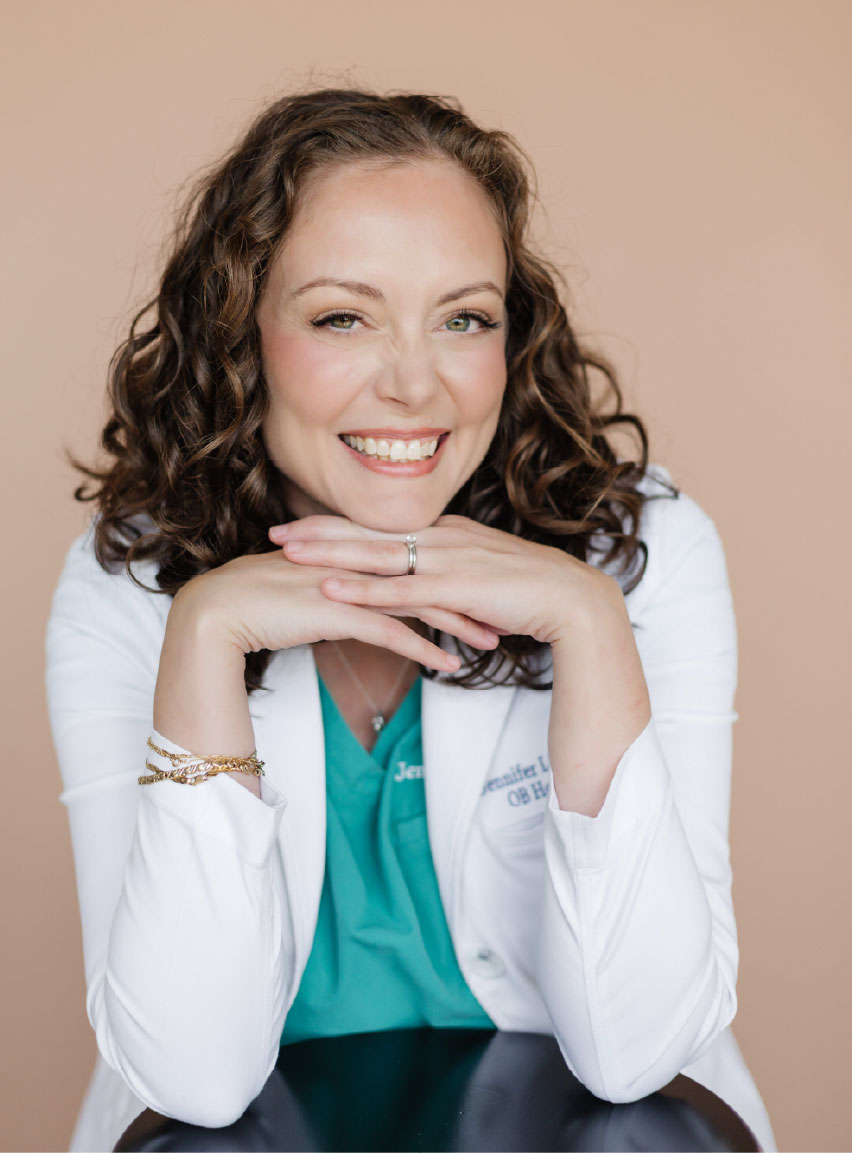
Of course! I'm Dr. Jen Lincoln, a board-certified OB-GYN and OB hospitalist in Portland, Oregon. I've also spent the last several years building a social media platform focused on evidence-based reproductive health education — mostly trying to drown out the noise of misinformation with actual facts that are easy to understand and non-judgmental. In 2021, I wrote my first book, Let's Talk About Down There, before diving into birth with my brand new book, The Birth Book: An OB-GYN’s Guide to Demystifying Labor and Delivery. I’m a mom to two boys, love to read, am originally from New York, and will always be a Yankees and Knicks fan, and love naps, good coffee, and Seinfeld.
What made you become an OB-GYN?
I grew up without comprehensive sex ed, not knowing how anything worked. Going to college and medical school opened my eyes to why we must know how our bodies work. The field of OB-GYN seemed like the perfect field for me, and I really enjoy being present for so many huge moments of women’s lives. There's something powerful about being trusted with that. Over time, I've become just as passionate about the advocacy side — making sure patients have the information and autonomy they deserve.
That’s amazing! And it truly speaks to how education can change how we see the world. Can you tell us a bit more about The Birth Book?
It's the book I wish every patient could read before they walked into labor and delivery! It is the first book written by an OB-GYN that focuses only on the Labor and Delivery experience — written in plain language, grounded in evidence, and without the extremes of fear-mongering or toxic positivity that a lot of birth content falls into. I wanted people to feel genuinely prepared, not just vaguely reassured. It’s all in Q&A format, with tables, illustrations, checklists, and references, so someone who is pregnant (or loves someone who is) can walk into L&D empowered and educated.
Empowering through knowledge is definitely something we get behind, especially given all the misinformation out there! What motivated you to write about this topic?
Every shift in the hospital, I see patients who are caught off guard by things that were predictable had they known what questions to ask or had more time to have these discussions at their prenatal visits. And it’s not because they weren't smart or engaged — but because nobody told them, or gave them the space to get really granular about a topic…because a 15-minute prenatal visit isn’t set up for that. Birth has been mystified and medicalized in a way that strips people of their agency, and I think that's a problem we can actually solve with better information.
How would you say information helps in the birthing process?
Information reduces fear. And fear in labor has real physiological consequences — it can make pain feel worse and make you more likely to view your birth as traumatic. When you know what a contraction is doing, what a cervical exam means, and why someone is suggesting a particular intervention, you can engage with it instead of just bracing for it or feeling like you’ve been told what to do, without any context.
It sounds like there’s a lot that can be done to help give back that feeling of control. How about knowledge gaps — what do those look like in your work?
On the patient side, most people don't have a clear picture of what labor actually looks like from start to finish — the timeline, the sensations, the decision points along the way. They arrive not knowing what's normal, what's worth flagging, or even that they're allowed to ask questions and expect real answers. A lot of people don't realize they can say, "Can you explain that before you do it?" That's a gap we should have closed long before they hit 39 weeks.
On the provider side, the issue is less about clinical knowledge and more about communication. Too often, things are done to patients rather than with them — information gets delivered after a decision has already been made, or framed in a way that leaves no room for questions. Individualizing care instead of defaulting to whatever the protocol says requires actually talking to the person in front of you, and that's a skill that doesn't always get prioritized in training.
Interesting! Can you tell us more about that?
We have a massive informed consent problem in obstetrics. Things happen to patients without adequate explanation — interventions are framed as recommendations when they're actually choices, and patients often don't realize they can ask questions or decline. I think for a large part of OB-GYNs and nurses, we aren’t trying to do this, but we just assume our patients understand what we mean without taking the time to really ask (though yes, some providers out there definitely still practice “But this is just the way I do it” medicine.) Add to that the way birth has been sensationalized by the media and sanitized by wellness culture, and many people arrive in labor with a lot of fear.
It’s fascinating to hear your perspective from the inside. With your experiences in mind, what systemic changes would you like to see to enable safer birth experiences?
Universal access to doulas would be amazing, as we know having one decreases your chances of needing a C-section and can leave you feeling more supported. Better postpartum support infrastructure would also be a game-changer. And of course, a serious reckoning with racial disparities in maternal outcomes.
We couldn’t agree more. It’s shocking that Black women are 2 to 6 times more likely to die from pregnancy complications than white women. How do you think your book can help all women in their birth experience?
Knowing what you should have a right to changes the dynamic in the room! When you understand what's happening, what your options are, and what questions to ask, you stop being a passenger and start being a participant. That matters for outcomes, but it also matters for how people feel about their experience long after delivery. With 1 in 3 births being reported as psychologically traumatic in the United States, we are long overdue for more actively making birth better. I hope my book plays a part in that.
We hope so too! Did you have any revelations while writing this book? Was there anything new you learned or found surprising?
Writing it forced me to sit with just how much we ask patients to navigate without giving them the tools to do it. I knew this intellectually, but spelling it out question by question made it more concrete. I also found myself revisiting some practices we do routinely in obstetrics and asking hard questions about the evidence behind them — or the lack of it. So while I started writing this book for pregnant people, it very quickly became a guide I hope other OB-GYNs, midwives, and labor nurses read too to see how we can (and must!) do better by how we care for our patients.
It really sounds like a book that everyone can use. Do you have some tips you’d like to share with Cyclers who are close to giving birth? What should they know?
Read my book! And I’m not just saying that because it’s mine (I promise!) but because I truly believe it’s one of the best ways to prepare yourself. Have your partner read it, too. And if you can, take a birth class so you can really spend some hands-on time learning and asking questions. Make a birth preferences document, but hold it loosely. Know that labor rarely looks like it does in the movies. And please, ask questions. "What are my options?" and "What happens if we wait?" are two of the most powerful questions you can bring into a delivery room.
Asking questions is such a good, actionable tip! How about postpartum? How can women support themselves in the days or weeks after giving birth?
Lower the bar dramatically for what counts as a productive day. Healing from birth — whether vaginal or cesarean — takes time, and our culture is terrible at acknowledging that. Accept help. Don't suffer through breastfeeding thinking it should hurt, but get help. Watch for signs of postpartum depression and anxiety, which are far more common than people realize, and ask for support early.
Great point. Is there anything you’d like to say to women who are feeling uncertain about giving birth right now?
Your feelings are valid — the system is imperfect, and there are real inequities in who gets good care. But information is one of the most powerful tools you have. Knowing your rights, knowing your options, and having someone in the room who will advocate for you can make a real difference. You don't have to just show up and hope for the best.
And for women at the start of their conception journey, or those who aren’t there yet — how can all women learn from your book?
You don't have to wait until you're pregnant to start learning about birth! Understanding how labor works, what interventions exist and why, and how to advocate for yourself in a medical setting is relevant from the moment you start thinking about trying to conceive, and it can also help you figure out who you do want to see for your care once you do get pregnant (I have checklists in my book to help with this)! The more you know going in, the more agency you'll have throughout the whole journey.
We love that. Knowledge truly is power! Okay, last question: What is the one key message you’d like people to take from this book?
You deserve to understand what's happening to your body. Full stop.
Those are powerful words to end on. Thank you so much for taking the time to talk to us, Dr. Lincoln!
Take control of your pregnancy journey
We want to give a big thank-you to Dr. Lincoln for sharing her experiences and thoughts on how to make labor and delivery safer through knowledge. If you’re curious to learn more, order her new book, The Birth Book: An OB-GYN’s Guide to Demystifying Labor and Delivery, now available online.
Whether you’re planning to grow your family (now or in the future), are already pregnant, or have recently given birth, Natural Cycles has a dedicated experience for every stage of your pregnancy journey. NC° Plan Pregnancy pinpoints your most fertile days, helping you get pregnant faster. Switch to NC° Follow Pregnancy to track how your baby and body develop week-by-week. After birth, NC° Postpartum is there to help support you as you recover after labor.
Did you enjoy reading this article?