Luteal phase discharge: Why it happens & what to expect

Lucy Abrams-Husso

Dr. Chiara Rizzi

Follows NC° Editorial Policy
At Natural Cycles, our mission is to empower you with the knowledge you need to take charge of your health. At Cycle Matters, we create fact-checked, expert-written content that tackles these topics in a compassionate and accessible way. Read more...
Key takeaways
-
Luteal phase discharge is typically thicker than the discharge you get around ovulation, it also tends to be whiter in color, and there might be less of it
-
Vaginal discharge is your vagina’s natural way of staying clean and healthy and is usually nothing to worry about, but sudden changes to discharge or a foul smell can be a sign something is off
-
The color, amount, and texture of discharge change throughout our menstrual cycles, and can be affected by things like hormonal birth control, pregnancy, and infections
Ever wonder why your discharge looks different at various points in your menstrual cycle? Each of us experiences changes to our vaginal discharge, driven in large part by the hormonal fluctuations that steer our cycle. In this article, we’ll cover luteal phase discharge, including why it happens and what to expect. We’ll also touch on the differences and similarities between premenstrual and early pregnancy discharge, and why discharge isn’t the most reliable signal of pregnancy.
What is discharge?
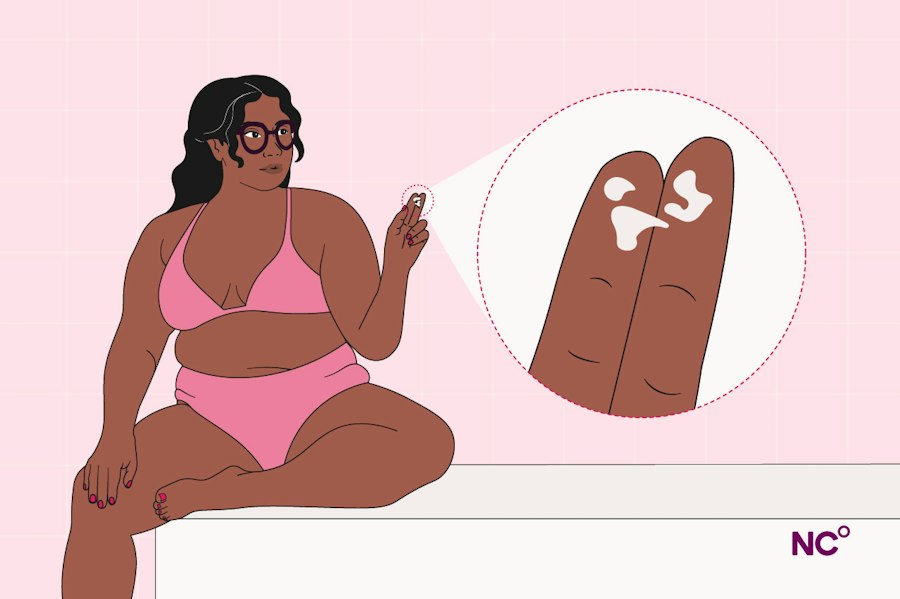
Vaginal discharge generally describes any fluid that comes out of the vagina throughout your menstrual cycle that is not your period. The vagina is self-cleaning, which means that it keeps itself healthy by releasing different fluids to help ward off infection and stay moisturized. Discharge typically includes cervical mucus, old skin cells, and different bacteria.
The texture, color, and amount of discharge can change over the course of a regular menstrual cycle, but healthy discharge is usually clear or white and has little or no odor. During the follicular phase, which is the first part of your menstrual cycle, discharge can be thick and sticky, changing to a stretchy and slippery texture, like an egg white, around the time of ovulation [4]. Symptoms like irritation, itching, or a strong odor can be a sign of infection or other issue. [1]
What to expect from luteal phase discharge
The luteal phase is the latter part of your menstrual cycle, beginning at ovulation, usually lasting around two weeks [2]. During the luteal phase, fluctuating hormone levels can prompt a variety of physical, mental, and emotional symptoms commonly referred to as premenstrual syndrome, or PMS [3]. Just before and during ovulation, you tend to produce the highest amount of discharge, and it is typically slippery, stretchy, and clearer [4]. White discharge after ovulation can be thicker in texture, and the quantity tends to decrease through the luteal phase. It’s also normal to notice very little or no discharge or even feel a bit dry in the days leading to your period. If you’re on hormonal birth control, it can affect the composition of your discharge, altering its texture and quantity. [1,4,5,8]
Luteal phase discharge vs early pregnancy discharge
Vaginal discharge might not be something you have noticed much before, but if you’re trying to conceive or using cervical mucus monitoring as birth control, changes to discharge can alert you to important fertility stages like ovulation. At the same time, discerning between luteal phase discharge and discharge in early pregnancy is not always easy.
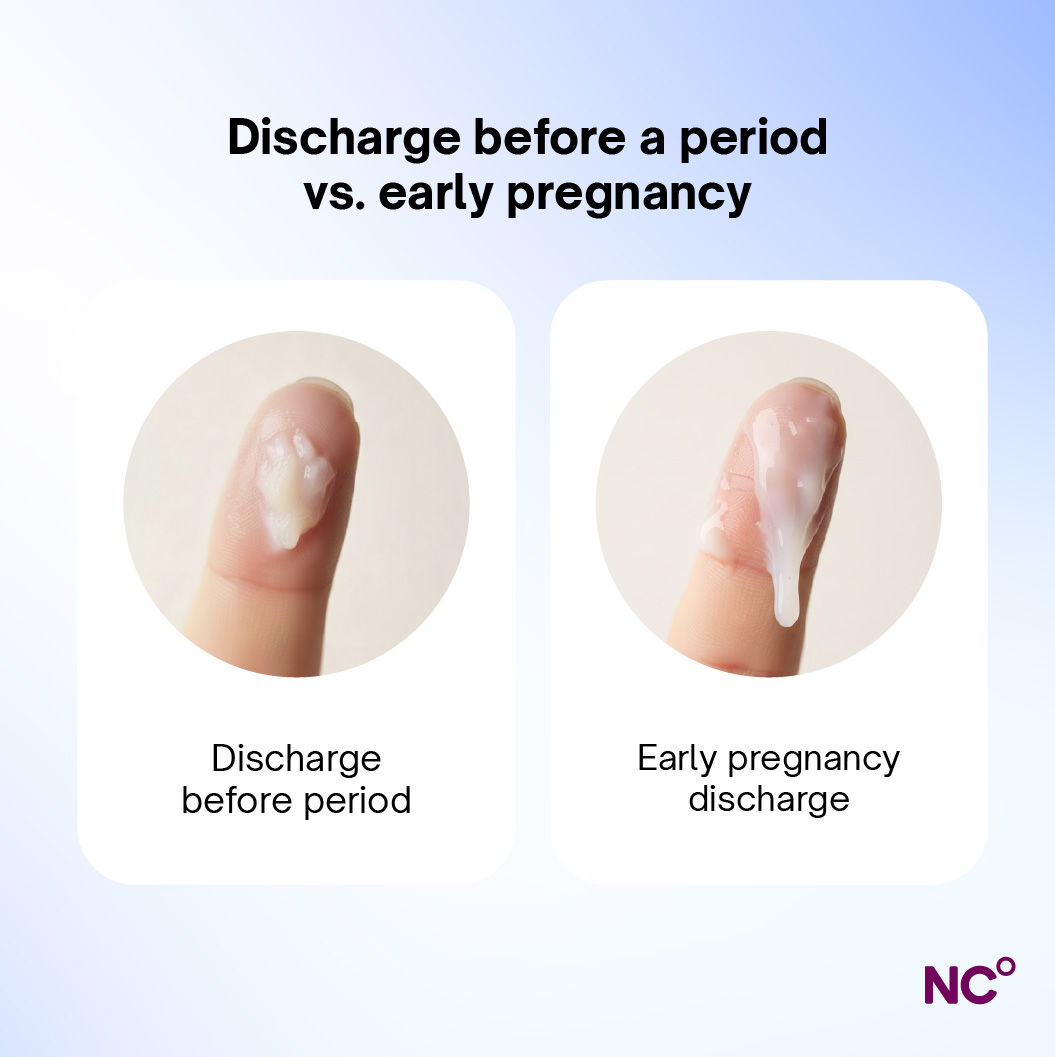
In general, before your period there can be little to no discharge, or discharge that’s cloudy, sticky, lumpy, or dry [5]. If conception occurs, however, the amount of discharge tends to increase [6]. Some people might notice differences between luteal phase and early pregnancy discharge, but the differences might also be subtle or even unnoticeable for others.
Causes of luteal phase discharge
After ovulation, rising progesterone levels reduce the amount of cervical mucus your body produces, which can result in less discharge and/or discharge that’s a different texture than during ovulation [4]. Changing hormone levels also affect the bacterial composition in your vagina. High amounts of estrogen and progesterone after ovulation tend to encourage more lactobacilli, a type of friendly bacteria that help fight infection [1,9]. Luteal phase discharge can also be influenced by things like sexual arousal. This is one of the reasons why using cervical mucus monitoring for fertility awareness can be tricky. Your discharge is affected by a number of different factors including medication, feminine hygiene products, douching, sex, breastfeeding, and even having a pelvic exam [7].
Managing luteal phase discharge
If your discharge is bothering you, it’s always a good idea to talk to a medical professional. That said, there are some steps you can also take at home to manage discharge. For example, it’s recommended to wash the skin around your vagina gently with water and to use only mild, non-perfumed soaps. Soaps and gels with perfumes, vaginal deodorants, scented hygiene wipes, and douching (washing inside your vagina) can actually irritate the area and make any issues worse [8]. If your discharge has a strong odor or changes color, it can be a sign of an infection, requiring a visit to a doctor.
There are also lifestyle and sexual habits that scientists have linked to vaginal imbalance. Smoking, stress, and diets that are high in sugar and fat are all associated with disruption to levels of microbes in your vagina. Research suggests that a balanced diet, managing stress, and quitting smoking can all contribute to a healthier vaginal microbiome. [1,9]
When to talk to a doctor
If your discharge continues to cause disruption, or you experience changes to the smell, color, or texture of your discharge, it’s important to see a doctor to diagnose the underlying cause. Strong odors, pain, or discomfort can be a sign of an infection [8]. It’s also important to consult a healthcare provider if you are ever concerned about your discharge. Even if there isn’t a medical issue, discharge can be bothersome for some people. A professional can help you explore ways to manage it, like probiotics and prebiotics, which some studies suggest may help support a healthy vaginal microbiome [9].
Know your body better with Natural Cycles
Natural Cycles is the first FDA-cleared birth control app. This hormone-free temperature-based technology can also help you plan pregnancy if and when the time is right. Natural Cycles can also help you learn more about what’s going on behind the scenes through your menstrual cycle. The app uses your body’s biomarkers to predict cycle phases, like when you’re going to ovulate and get your period. You can also use the app to track other symptoms such as changes to your cervical mucus, helping you recognize patterns in your cycle. Download our unique Cycle Report for a comprehensive picture of these changes you can easily share with your healthcare provider. Ready to learn more? Why not see if Natural Cycles is right for you today?
Did you enjoy reading this article?
Frequently asked questions