What is ovulation? Timing, symptoms & how to know when you’re fertile

Iona Nelson

Maja Garbulinska

Follows NC° Editorial Policy
At Natural Cycles, our mission is to empower you with the knowledge you need to take charge of your health. At Cycle Matters, we create fact-checked, expert-written content that tackles these topics in a compassionate and accessible way. Read more...
-
Ovulation is the release of a mature egg cell from an ovary, occurring once per menstrual cycle and controlled by hormonal changes
-
Ovulation varies from person to person, and though it usually occurs in the middle of your cycle, it can happen anytime during your cycle
-
There are several methods you can use to track or predict ovulation and your fertile window, including Natural Cycles, ovulation tests, and fertility awareness methods
-
Many things can affect ovulation, from lifestyle factors to medical conditions, and you should always speak to your doctor if you have any concerns
Ovulation is a key moment in our menstrual cycle, and plays a vital role in fertility. Yet to many, it remains somewhat of a mystery. From hormonal fluctuations to how long it lasts, this article will help you understand what ovulation is, the changes in your body that trigger it, conditions that can affect ovulation, and how to track ovulation and your fertile window.
What is ovulation?
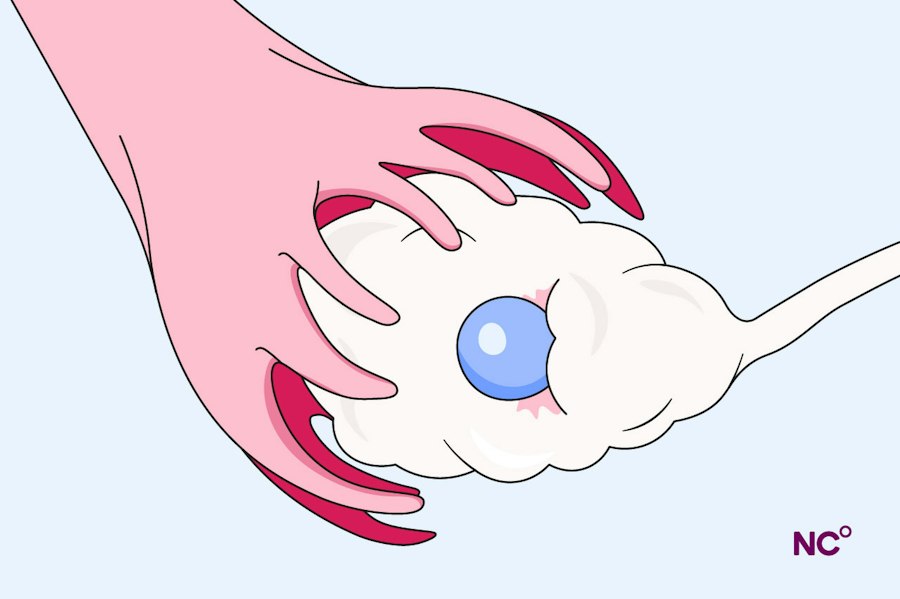
Ovulation is the release of a dominant, mature egg cell from an ovary. This typically happens once per menstrual cycle, and the egg cell lives for up to 24 hours after being released. During this time, the egg can be fertilized by a sperm cell [1, 2].
What happens when you ovulate?
You are born with all of your eggs, stored in undeveloped follicles in your ovary [3]. Each menstrual cycle, hormonal changes in the follicular phase (beginning on the first day of your period and ending with ovulation) allow your body to mature some of these follicles and release an egg (in rare cases, more than one) for fertilization [4]. The main hormones involved in ovulation are:
- Follicle-stimulating hormone (FSH): Supports the growth of several follicles in each ovary, one of which becomes the dominant egg cell released at ovulation [1].
- Estrogen: Produced by the dominant egg cell, halting the development of the other follicles [5]. Estrogen also thickens the uterine lining, which is important if the egg is later fertilized [6].
- Luteinizing hormone (LH): LH levels surge one to two days before ovulation, triggering the release of the mature, dominant egg cell. It also plays a crucial role in supporting progesterone production, which prepares the uterine lining for implantation [1].
- Gonadotropin-releasing hormone (GnRH): Helps to support the release of both FSH and LH [1].
If the egg is fertilized by a sperm cell, it implants in the uterine lining and, if successful, pregnancy begins. If it is not fertilized, the egg cell dies, and, at the end of your cycle, the uterine lining is shed [7]. This shedding is your period and marks the start of your next menstrual cycle.
Fun fact: Though most ovulations release only one egg cell, occasionally two — or, on very rare occasions, more — are released at the same time, called hyperovulation. If these are fertilized, this is the start of fraternal twins (or triplets!).
When do you ovulate?
Ovulation is often assumed to occur approximately halfway through your menstrual cycle, around day 14, based on a standard 28-day cycle. But a Natural Cycles study of over 600,000 ovulatory cycles found that the average cycle length is 29 days, and the average day of ovulation is day 17. Even so, ovulation can technically happen anytime in the cycle [8]. Everyone’s ovulation timing and menstrual cycle are unique to them, which is important to keep in mind when you’re trying to work out when you ovulate (more on this below).
Ovulation and birth control
Most hormonal contraceptives, such as the combined pill, implant, or patch, typically prevent pregnancy by stopping ovulation from occurring. They do this by releasing progestin (a synthetic progesterone compound), or a combination of progestin and estrogen, to interrupt your usual menstrual cycle hormones and stop the release of an egg [9, 10]. Without an egg cell to fertilize, pregnancy can’t happen. Sometimes, those taking progestin-only contraceptives, such as the hormonal IUD or mini-pill, will still ovulate [11]. Non-hormonal options, such as condoms, the copper IUD, or Natural Cycles, do not affect ovulation.
How do I know if I’ve ovulated?
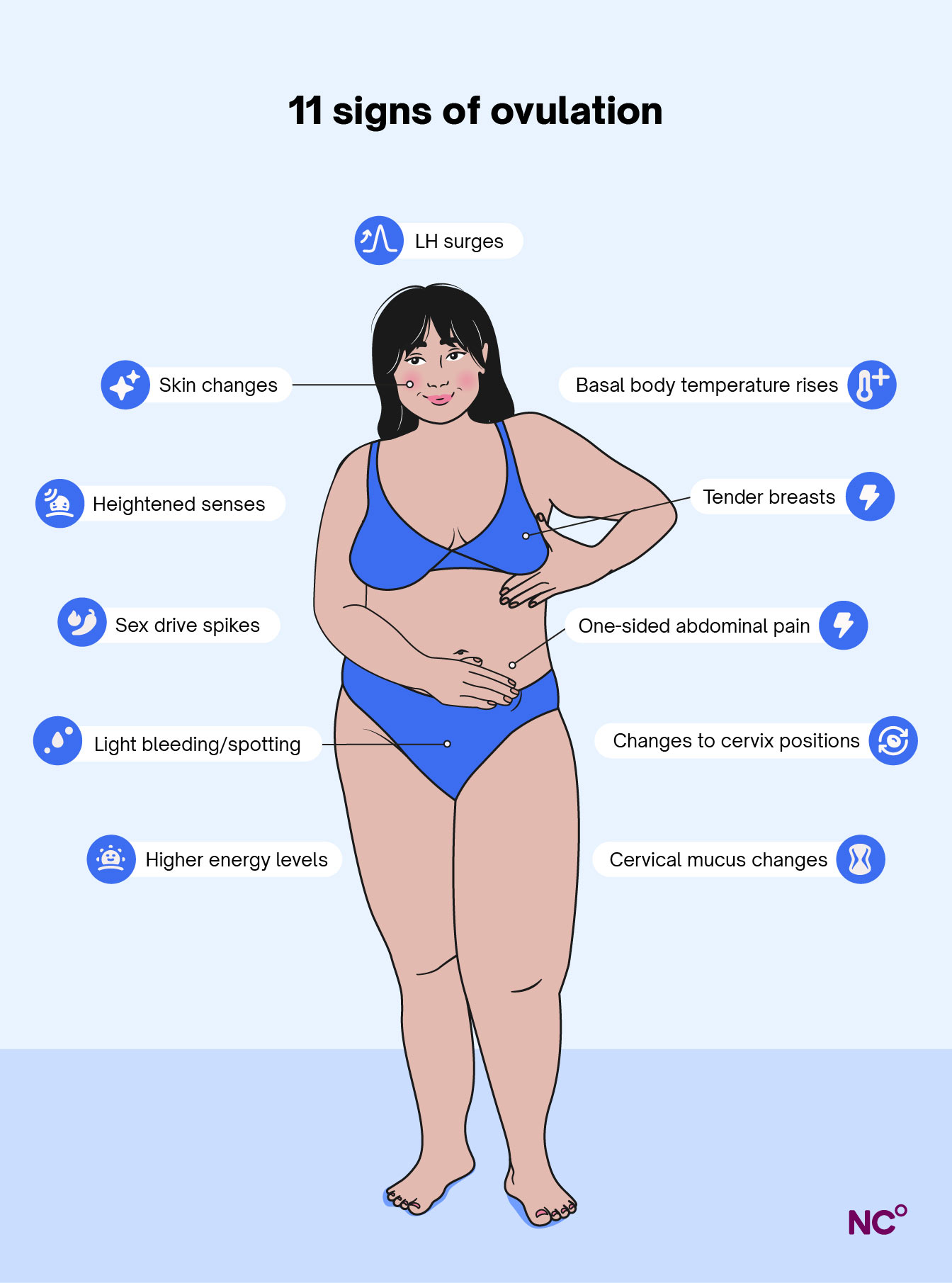
It’s often hard to know if you have ovulated, as it is an internal process. However, you might notice changes in your body that can be signs of ovulation. For example:
- Ovulation cramps: Also known as Mittelschmerz, up to 40% of women experience pain on one side around the time of ovulation [12].
- Ovulation spotting: More research is needed, but one study of over 200 women found that 5% of participants reported light, mid-cycle bleeding for up to two days, thought to be caused by the hormonal changes associated with ovulation [13].
- Change in cervical mucus: Your body produces more cervical mucus near ovulation, and it is usually thin and slippery, sometimes resembling egg whites [14].
- Higher sex drive: If you’ve noticed that your libido is higher around the middle of your cycle, you’re not alone. Studies have found that interest in sex tends to be higher during the follicular phase or around ovulation, although this varies considerably between individuals [15].
- More energy: Along with a rise in libido, it’s also common to feel you have more energy around ovulation [16].
- Breast tenderness: Some individuals experience pain or swelling in their breasts around ovulation, but breast tenderness is most commonly associated with hormonal changes after ovulation [17].
- Heightened senses: More research is needed, but some studies suggest your sense of smell is more sensitive around ovulation, and you can be more sensitive to pain [18, 19]. Another small study of 30 women suggested that hearing was more sensitive in the early luteal phase, just after ovulation [20].
- Skin changes: Some people notice their skin looks more radiant and healthy around mid-cycle, whereas others can experience acne during ovulation [21].
Remember, many of these symptoms can be related to other things, such as PMS, pregnancy, or implantation, and getting to know your cycle and symptoms can help you tune in to your body throughout your cycle phases. In the NC° app, you can track any symptoms you notice and start to spot patterns between your cycle and what you are feeling or noticing. At the end of each cycle, you’ll receive a Cycle Summary detailing which symptoms you recorded and when, along with information about ovulation, cycle length, and more.
Ovulation and fertility
Even though a released egg cell only survives up to 24 hours, your fertile window — the time in each cycle when sex can lead to pregnancy — is actually a maximum of six days long [22]. Ovulation occurs at the end of the fertile window. But sperm can survive for up to five days in the female reproductive system [23]. This means that you are fertile during the five days before ovulation, the day of ovulation and, in some cases, the day after ovulation. Outside of this time, you are not fertile. If you are trying to get pregnant, knowing your fertile window can help with planning. For those wanting to prevent pregnancy, the best time to have sex to avoid pregnancy is outside of your fertile window.
How to track ovulation
Whatever your goal, knowing when you are ovulating isn't always simple. Many of us aren’t aware of it when it happens. But the good news is that several methods can help you predict ovulation and your fertile window, whether you're trying to conceive or avoiding pregnancy.
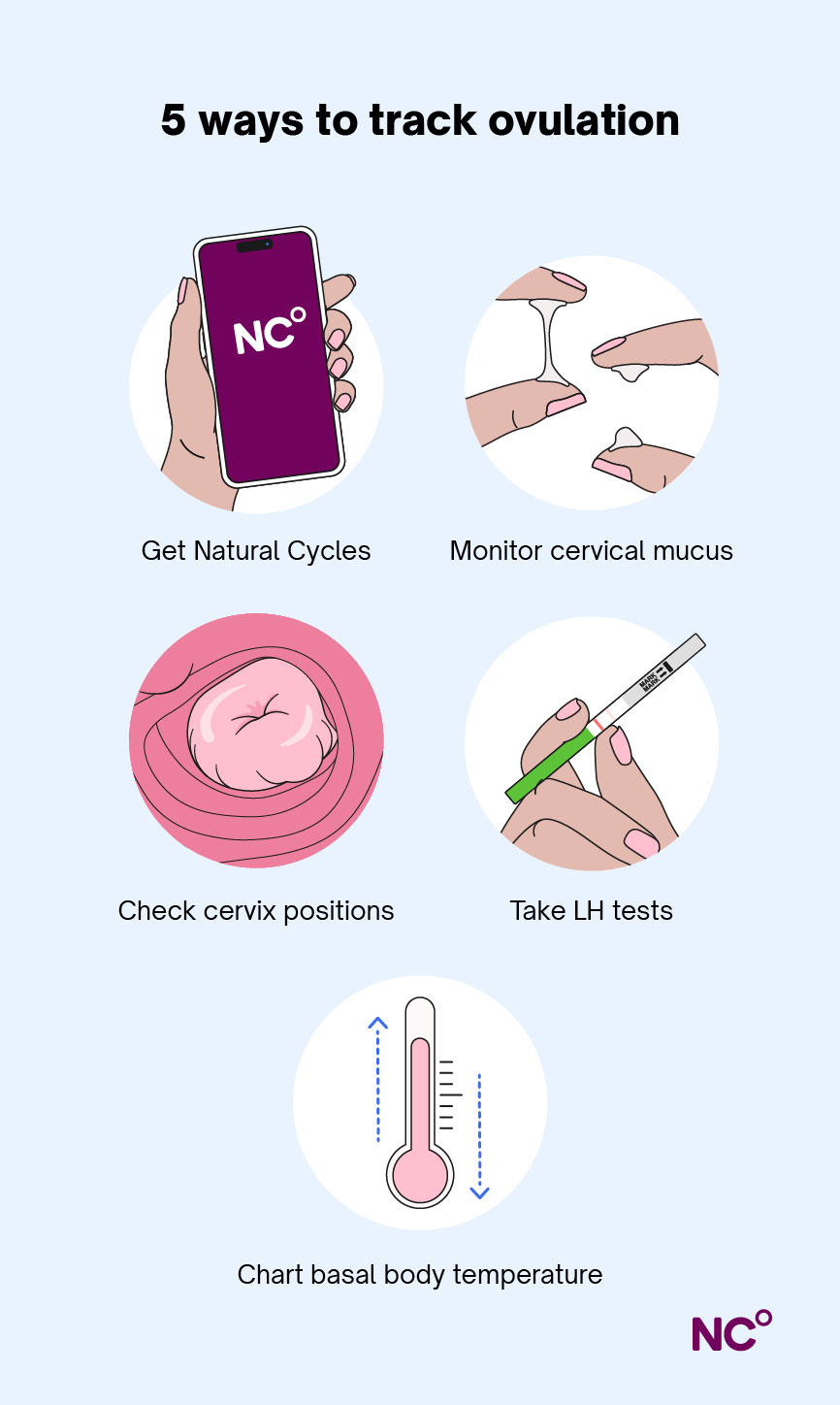
Natural Cycles
Natural Cycles can be used both to plan pregnancy or avoid pregnancy, and is FDA-cleared for use as hormone-free contraception, with a typical use effectiveness rate of 93% and perfect use effectiveness of 98% [24]. Its one-of-a-kind algorithm uses your skin temperature, heart rate, and unique cycle characteristics to predict ovulation and your fertile window. Each morning, the NC° app syncs with your wearable — the NC° Band, Garmin, Oura Ring, Apple Watch, or Whoop — and clearly shows whether it is a fertile or non-fertile day. You can enter ovulation test data to help the algorithm narrow down your fertile window even more. You can also record other symptoms, such as cervical mucus — these can help you spot patterns in your own data over time.
Natural Cycles is a suitable option for those looking for hormone-free birth control, trying to conceive, or just wanting to learn more about their cycle, even if you have irregular periods. It is effective from the first day of use, but if you are using it as birth control, you may get more Red Days (when you’ll need to abstain or use condoms) for your first one to three cycles.
Basal body temperature method
Your basal body temperature (BBT) is your body’s lowest resting temperature [25]. BBT follows a clear curve throughout your menstrual cycle: it is lower during the follicular phase, then rises slightly but significantly after ovulation. It then stays elevated until your next period, when it drops lower again [26]. The BBT method is a type of fertility awareness method (FAM) whereby you track your BBT on a daily basis to spot this shift in temperature and know when you have ovulated.
One difficulty with using BBT as a standalone ovulation tracker is that it tells you when your fertile window has ended, not when it begins. The BBT method also requires a special thermometer, consistent measuring and charting, and is not recommended for those with irregular cycles or thyroid conditions. You must also exclude temperature readings in certain circumstances, such as if you are hungover, ill, or haven’t slept well.
Cervical mucus method
You can use the change in your cervical mucus to estimate when ovulation and your fertile window might occur. It involves daily checking and logging of cervical mucus characteristics such as color, texture, and amount. You can check your cervical mucus by either wiping the opening of your vagina (before urinating) and looking at the toilet paper, looking at the discharge in your underwear, or inserting clean fingers into your vagina and checking the mucus on your fingers. [27]
The cervical mucus method is another type of FAM and has its own pros and cons. One advantage is that it’s free and can be done at home. But this comes with a caveat. Using it effectively can take time and may require dedicated training. It is also important to know that many external factors can affect your cervical mucus characteristics, such as arousal fluid, breastfeeding, and sexually transmitted infections (STIs). It is often better used alongside other methods, such as BBT, together known as a symptothermal method [27].
“Cervical mucus changes throughout the cycle in response to hormones and can provide clues about where someone is in their cycle. Around ovulation, discharge often becomes clear, slippery, and stretchy, which helps sperm travel through the reproductive tract.” - Dr. Wong
Cervix positions
In addition to producing cervical mucus, your cervix also changes position throughout your menstrual cycle. During your fertile window, your cervix sits higher, near the top of your vagina. It is also softer and more open to allow sperm to pass through. After ovulation, during the luteal phase, your cervix moves lower in the vagina and feels more closed and firm [28]. It stays low throughout your period too, opening slightly to let menstrual blood out.
To check your cervix position, gently insert a clean index or middle finger into your vagina, as high up as is comfortable. Aim up and back, in the same direction you would insert a tampon or menstrual cup. Your vagina will feel soft and spongy, whereas your cervix will feel firmer and donut-shaped. If you are trying to find your cervix for the first time, try during your period, when your cervix is lower and easier to locate. Tracking your cervix position is not an exact indicator of fertility and is better used as a general guideline to understand your body and menstrual cycle better.
Ovulation tests
Also known as ovulation prediction kits (OPKs) or LH tests, at-home ovulation tests measure luteinizing hormone (LH) in your urine. A positive LH test confirms your LH levels are high enough to indicate the LH surge before ovulation, described above. This can help predict ovulation, but keep in mind a positive LH test does not confirm ovulation has occurred or will occur, and the results also only show your LH levels for that one day. If you are an NC° user, the app will let you know when the best days for testing are.
What conditions can affect ovulation?
Ovulation can be impacted by many things, from reproductive conditions to lifestyle factors, and ovulation disorders account for up to 30% of infertility cases [29]. Here are some common conditions that can affect ovulation:
- Anovulation: Anovulation is when an egg cell is not released during your menstrual cycle [29]. Many women will experience an anovulatory cycle at some point in their lives; however, some conditions cause regular anovulation that can affect fertility (more on this below).
- Menopause: As we age, our cycle length tends to shorten, and ovulation happens earlier [8]. In the run-up to menopause — your final period, confirmed after one year without a menstrual bleed — we enter a transitional phase called perimenopause, when we experience erratic hormonal fluctuations and are more likely to experience anovulatory cycles and irregular periods [30, 31].
- Polyendocrine metabolic ovarian syndrome (PMOS): PMOS (previously named polycystic ovary syndrome or PCOS) is a condition thought to affect around 5%–20% (depending on the diagnostic criteria) of women, though many do not show symptoms, so this figure could be higher. PMOS affects metabolic, reproductive, and psychological health, and the most common symptoms include irregular cycles and anovulation [32].
- Primary ovarian insufficiency (POI): POI is when your fertility starts to decline earlier than expected, before the age of 40. Often, the first sign of POI and ovulation problems is irregular or missed periods [33].
- Thyroid conditions: Hypothyroidism (an underactive thyroid) can cause a hormonal imbalance that can delay or stop ovulation. Hyperthyroidism (an overactive thyroid) may also be linked to infertility and irregular cycles, though more research is needed [34].
- Stress: Cortisol, a stress hormone, can disrupt the usual hormonal pattern of your menstrual cycle, leading to irregular periods, delayed ovulation, or anovulatory cycles [35].
- Tobacco: Cigarette smoking and other tobacco use can affect levels of estrogen and progesterone, leading to fewer follicles maturing at ovulation. It also impacts the quality and quantity of eggs in the ovaries [36, 37]. Early studies also indicate e-cigarettes, such as vapes, may also impact fertility, though more research is needed [38].
“Many people have irregular cycles when they’re in their teens, or in perimenopause. These are the times that the hormonal system that controls ovarian function and ovulation are either maturing, or winding down. Ovulation or releasing an egg from the ovary is a trigger that regulates cycles, and if you don’t ovulate, you’ll skip a period or have a delayed period. Lots of things can throw off ovulation and the hormones, including physical or emotional stress, illness, certain medications, medical conditions like thyroid problems, PCOS, or changes in weight, exercise, or nutritional status.” - Dr. Karen Tang
When to see your doctor
The occasional cycle irregularity is usually nothing to worry about. But if you notice any unusual symptoms, or think you have a condition affecting your ovulation, it is best to speak to your doctor. You should especially seek advice if:
- Your menstrual cycle is typically longer than 35 days or shorter than 21 days
- Your cycle length varies by more than seven days
- You have a very heavy period that soaks through one or more tampons every hour
- Your period lasts for longer than seven days
- You haven’t had a period for three to six months
- You experience any bleeding or pain during sex
- You notice abnormal spotting between periods
- You are starting or changing hormonal contraception
- You have been trying to get pregnant for more than 12 months
- You are over the age of 35 and trying to conceive
[39, 40]
“It’s important to know what a “normal” cycle is, and what are signs of an “abnormal” cycle. I’ve seen countless women with abnormal bleeding, pain or other severe symptoms with periods, missing or irregular periods, who have conditions like endometriosis, adenomyosis, fibroids, PCOS, perimenopause, etc. And obviously if you’re trying to get pregnant, understanding what happens during the parts of the cycle, when ovulation is happening, when intercourse should happen, will optimize your chances of conceiving.” - Dr. Karen Tang
Track ovulation and more, with Natural Cycles
Natural Cycles makes tracking ovulation and your fertile window simple by working with your chosen wearable device. All you need to do is open the NC° app each morning, and it will sync automatically with your wearable, gaining information on your skin temperature and heart rate. Our unique algorithm uses this information, along with your cycle data, to let you know whether you are within your fertile window.
Natural Cycles goes beyond cycle tracking and ovulation prediction, letting you track any other symptoms you notice throughout your cycle, too, from spotting and PMS to sleep quality and emotions. This can help you learn more about your body’s rhythm during each menstrual cycle phase, or spot anything out of the ordinary. You’ll get a Cycle Summary at the end of each cycle, and you can download a report to share with your doctor. There are several modes available, too, whether you are planning a pregnancy, looking for hormone-free birth control, or wanting support during perimenopause. Natural Cycles exists to empower you with knowledge about your cycle and fertility, whatever your goals or stage of life!
Did you enjoy reading this article?
Frequently asked questions