What causes vaginal dryness?

Lucy Abrams-Husso

Maja Garbulinska

Follows NC° Editorial Policy
At Natural Cycles, our mission is to empower you with the knowledge you need to take charge of your health. At Cycle Matters, we create fact-checked, expert-written content that tackles these topics in a compassionate and accessible way. Read more...
Key takeaways
- Vaginal dryness is a common condition that can affect women of all ages
- The most common remedies include personal lubricant, if dryness is mainly an issue during sex, vaginal moisturizers, and hormonal treatments
- If vaginal dryness is affecting your day-to-day life, it’s important to speak with your doctor or nurse for personal treatment advice
Discomfort down there can be a huge disruption to your day-to-day, and vaginal dryness might be to blame. Dryness can happen at any age, though it's most commonly linked to the major hormone-related shifts you experience through life from your menstrual cycle, postpartum, during perimenopause, and after menopause. In this article, we’ll talk about what causes vaginal dryness, what it feels like, and what treatment options are out there. We’ll also cover some frequently asked questions related to treatments and symptoms.
What is vaginal dryness?
When the vagina isn’t able to lubricate or moisten itself naturally, you can experience a condition called vaginal dryness. Vaginal dryness can happen at any age, but it’s most commonly associated with the symptoms of perimenopause and menopause.
The vagina doesn’t have a gland that continuously produces a moisturizing liquid or mucus. Instead, it stays naturally moist through normal, healthy blood flow. The pressure of blood flowing through the capillaries of the vagina pushes water and other small biological materials out from the gaps in between vaginal skin cells. Increased blood flow, like when you’re aroused, causes even more liquid to be released. [1]
The gas nitric oxide (NO), which your body naturally produces, helps relax blood vessels, allowing them to widen and improve blood flow throughout the body. Hormones like estrogen help the body make NO. Estrogen decline, which can occur naturally through the our menstrual cycles, postpartum, during perimenopause, and after menopause, can reduce your body’s ability to make NO and affects blood flow, thereby affecting moisture levels in the vagina. [1]
What does vaginal dryness feel like?
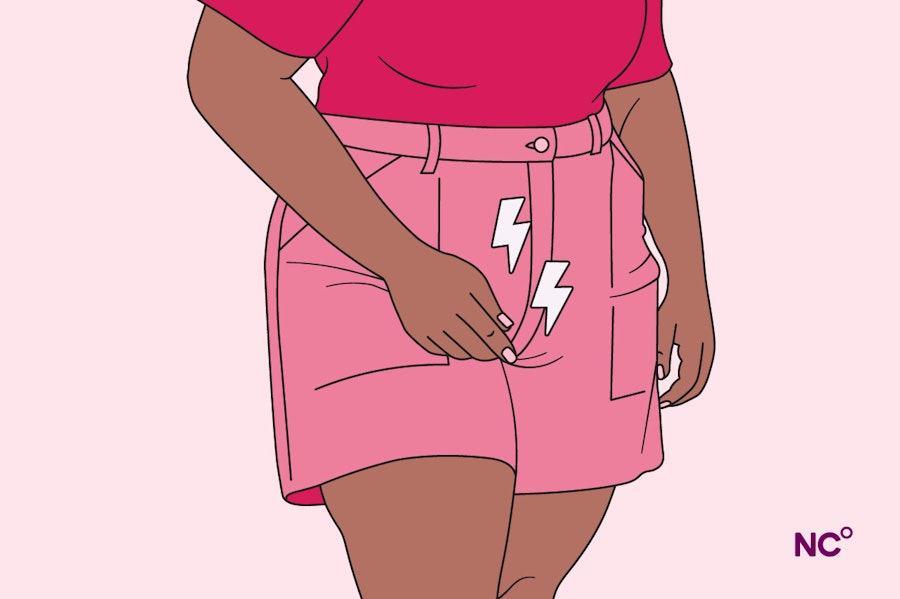
Vaginal dryness can be experienced differently by each of us. You might feel irritation, itchiness, or burning in your vagina throughout the day or feel pain or discomfort during sex. It’s also possible to suffer from other symptoms like unusual vaginal discharge, spotting or bleeding, feel the need to pee more often than usual, or you might start to get urinary tract infections (UTIs) more often. [2]
Vaginal dryness causes
Natural fluctuations in our hormones, certain prescription medications, chronic conditions like diabetes, and even some medical treatments are all linked to vaginal dryness. Even washing down there with some perfumed soaps, washes, or douches can cause dryness. [2]
The most common causes, however, have to do with estrogen fluctuations during our perimenopause and post-menopause and through our menstrual cycle. Let’s look at each in more detail.
Vaginal dryness during perimenopause and post-menopause
During perimenopause and afterward, at least 1 out of every 2 women experience a vaginal symptom like burning, irritation, dryness, incontinence, or increased UTIs associated with estrogen decline. It’s so common that doctors group these symptoms together and call it genitourinary syndrome of menopause, or GSM. It’s also sometimes called vulvovaginal atrophy or atrophic vaginitis (VVA). Unlike other symptoms of perimenopause, like hot flashes or night sweats, which can go away or lessen over time without treatment, GSM can stick around and even get worse after reaching menopause. For this reason, longer-term treatments for vaginal dryness experienced during perimenopause and post-menopause can be prescribed. [3]
Vaginal dryness and the menstrual cycle
During our hormone-driven menstrual cycle, estrogen levels fluctuate naturally. Estrogen increases during the follicular phase, which begins on the first day of your period, helping to thicken the uterine lining and prepare for the release of an egg cell during ovulation. Estrogen has a second, smaller peak during the luteal phase, but drops again before we get our period. When estrogen is at its lowest levels at the beginning and end of each cycle, it’s normal to experience vaginal dryness. Unlike GSM-related dryness, vaginal dryness during our menstrual cycle is considered temporary. [4]
Treating vaginal dryness
There are a number of different treatments for vaginal dryness, including personal lubricants, moisturizers, and hormone therapies. A pharmacist, nurse, or doctor can help you find the treatment that is best for you based on the underlying cause of your dryness and your individual health history.
Medical treatments
If you are experiencing vaginal dryness due to changes in your hormone levels caused by perimenopause, postmenopause, or another condition, you might be prescribed medicines to replace declining estrogen levels. These are known generally as hormone therapies (HT or HRT) and can come in pill, patch, gel, spray, cream, or implant form. [2,5]
While hormone therapies can help relieve a number of perimenopause symptoms, including vaginal dryness and protect against bone loss and osteoporosis, they are not recommended for everyone. If you have ever had breast or endometrial cancer or suffered from a stroke, heart attack, blood clots, or liver disease, some forms of systemic hormone therapy are not suitable, and your doctor will likely consider your medical history when prescribing such treatments. Hormone therapies are also not suitable for women who are pregnant or who are trying to become pregnant. [5,6,7]
Depending on your individual history, vaginal estrogen may need extra caution and a clinician’s review before use. You should check with a doctor or specialist nurse if you have had breast cancer, a blood clot, a heart attack, a stroke, angina, liver problems, or other conditions that could affect safety. However vaginal estrogen can still be considered for some people with a personal history of breast cancer if non-hormonal options have not helped. For example, depending on your medical history, vaginal estrogen may be considered after non-hormonal options have not helped, in discussion with a clinician. [6,7]
At-home treatments
Personal lubricants and moisturizers are effective for helping with discomfort caused by vaginal dryness and for helping make sex more enjoyable. Lubricants can be water-, silicone-, mineral oil-, or plant oil-based and are typically applied to the vagina and vulva, as well as to your partner’s genitals, before sex. Personal lubricants are generally recommended if you are noticing or bothered by vaginal dryness only during sex. [2,5,6]
Some vaginal moisturizers are also available over-the-counter. Instead of using them immediately before sex, vaginal moisturizers are usually applied regularly between one and three times per week. They work by sticking to the mucus-producing tissues in the vagina, hydrating the skin tissues, and improving vaginal hydration and helping support natural lubrication. Moisturizers are recommended for those with mild to moderate dryness and who are experiencing discomfort throughout the day, not only during intercourse. [2,5,8]
Vaginal dryness natural remedies
There are many plant and herbal supplements marketed to help with vaginal dryness and other perimenopause symptoms, including products containing soy, red clover, and black cohosh. However, there is limited scientific evidence that these products are safe or effective for treating vaginal dryness. Unlike prescription medicines, supplements are not evaluated through the same regulatory processes for safety, quality, and effectiveness before they are marketed. If you're considering using a herbal supplement or other complementary therapy, talk to your healthcare provider or pharmacist first. [5]
Vaginal dryness natural remedies
When to see a doctor
If you are suffering from vaginal dryness, or experiencing any other symptoms that concern you, it’s important to contact your nurse or doctor. While it’s possible to treat vaginal dryness during sex easily with personal lubricant, if you suspect your dryness is the result of perimenopause, a side effect to medication, or a medical condition, a healthcare professional can help diagnose the cause and recommend the most effective treatment.
Navigating perimenopause with Natural Cycles
NCº Perimenopause is the latest addition to Natural Cycles, developed to support you through the physical and cognitive changes you might experience in the journey towards and beyond menopause. Perimenopause is individual, which can make it difficult to understand where you are along the journey and what to expect. Tracking symptoms and lifestyle factors in NCº Perimenopause can help you learn more about your body and inform discussions with your doctor as you make a treatment plan Whether it’s just vaginal dryness, or other symptoms, why not see if Natural Cycles can help you understand your menopausal shift better today?
Did you enjoy reading this article?
Frequently asked questions