Menstrual cycle & sleep: Hormones, periods & what you need to know

Lucy Abrams-Husso

Dr. Genevieve Steele

Follows NC° Editorial Policy
At Natural Cycles, our mission is to empower you with the knowledge you need to take charge of your health. At Cycle Matters, we create fact-checked, expert-written content that tackles these topics in a compassionate and accessible way. Read more...
Key takeaways
-
Normal changes in hormone levels during your menstrual cycle, pregnancy, and perimenopause can affect your sleep
-
There are many different interacting factors that impact sleep quality
-
A regular sleep routine, relaxing before bed, staying active, and managing stress can all help you sleep better
Have you found that your sleep quality often shifts from one week to the next? Or maybe you’ve always been a good sleeper, but recently you’re tossing and turning. It could be that coffee you had in the afternoon or too much screen time before bed, but maybe it’s something else. Did you know that our hormones actually play a major role in sleep quality?
In this article, we’re going to talk about hormone-related sleep changes, which can happen at all stages of our reproductive life. We’ll offer some tips for improving sleep and go through some frequently asked questions.
Female physiology and sleep
For a long time, scientists believed the brain to be physically and functionally identical between men and women, assuming that variations in behaviors like sleep were largely due to social and cultural differences. However, researchers are beginning to understand that fundamental biological distinctions between male and female brains might play a larger role in sleep patterns than was previously thought [1].
Hormones are one important distinction. Female sex hormones play a major role in everything from brain development during puberty to reproductive processes like menstruation, pregnancy, and perimenopause [2]. As levels of different hormones change through each of these stages, they can affect how we experience sleep and sleep-related issues. At the same time, men and women can also experience sleep differently. Studies have shown that women report more sleep disturbances than men and tend to suffer more delays in diagnosing and treating their issues [1,3].
There is no ideal amount of sleep, and the optimal amount of sleep each of us needs can vary widely and change over time [4]. That said, not getting enough sleep, or enough good-quality sleep, can negatively affect both our physical and mental health [5]. Whether it’s taking longer to fall asleep, having more disrupted sleep, or experiencing a lower quality of sleep, it’s important to address sleep issues you might be suffering from and seek advice from a medical professional if needed.
Sleep and hormones: What the research says
While changes to our sleep patterns and sleep disruptions can result from lots of different biological and/or life-related causes, there are also normal variations in sleep that can be expected due to changing hormone levels during menstrual cycles, pregnancy, perimenopause, and postmenopause. Let’s take a closer look at how each one can impact our sleep differently.
Menstrual cycle and sleep
Changes to hormone levels drive our menstrual cycles, but these normal shifts can also affect how we sleep, how we experience sleep, and even leave a trace in the brain's electrical activity during sleep itself.
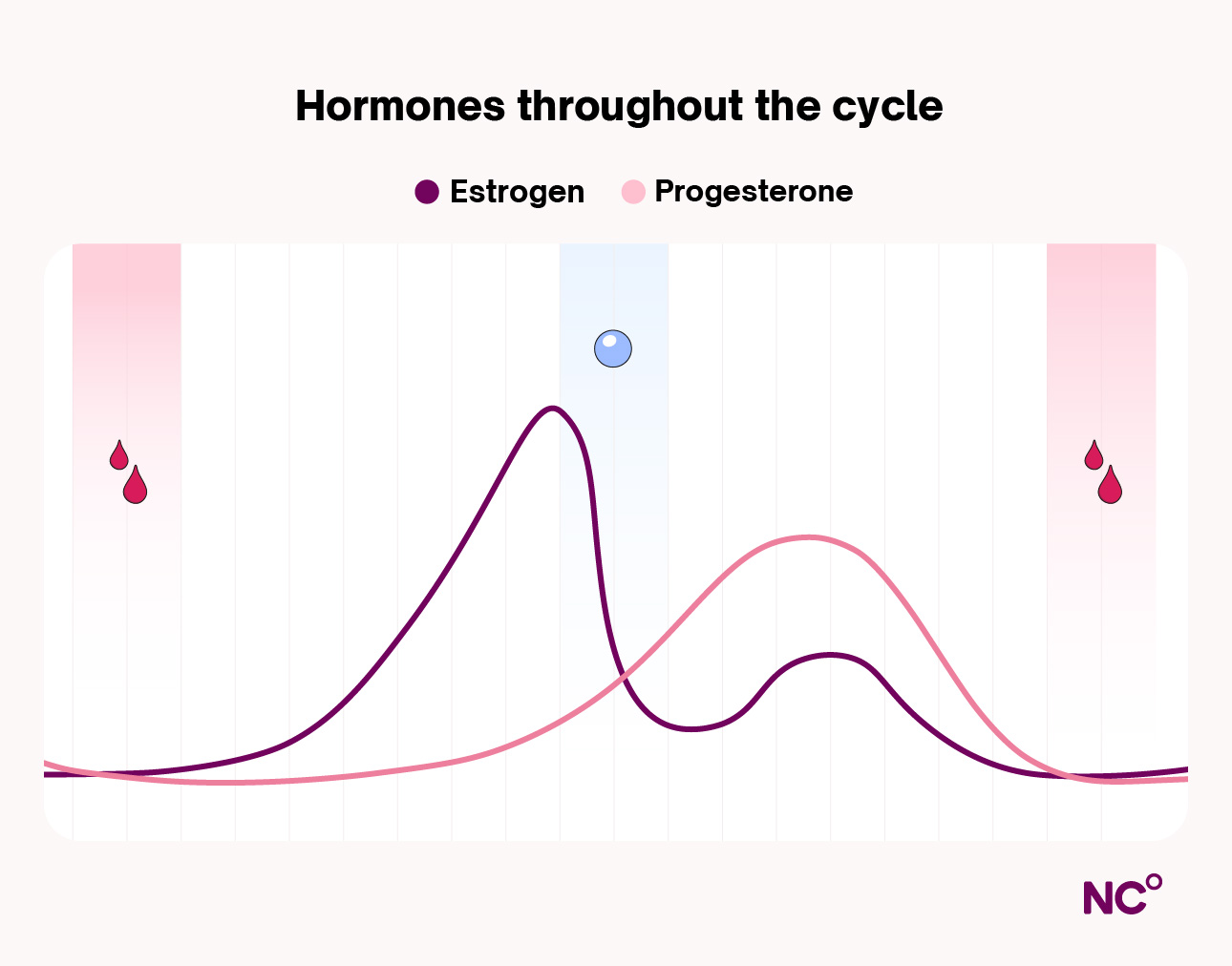
The fluctuation of different hormones throughout each menstrual cycle can affect our sleep in different ways. Estrogen and progesterone don't rise and fall at the same time. Instead, they each follow their own patterns through each cycle. During the follicular phase, which is the first half of your cycle, progesterone stays low while estrogen climbs steadily and reaches its highest peak of the whole cycle just before ovulation. During the follicular phase, women tend to experience fewer sleep disruptions and have reported better overall sleep quality [5].
During the luteal phase, the second half of the cycle, progesterone rises to become the dominant hormone, reaching its highest level, while estrogen is present at comparatively moderate levels. Studies have shown that women tend to report more sleep disruptions and lower overall sleep quality during the luteal phase [6]. Unless you become pregnant, both estrogen and progesterone drop sharply at the end of the luteal phase. Scientists have linked this sharp decline to the emergence of premenstrual syndrome (PMS) symptoms like headaches and cramps, which can in turn disrupt sleep during the days leading up to and during a period [6].
These hormonal shifts also seem to affect the sleeping brain. Researchers have studied sleep spindles, which are short bursts of brainwave activity during non-REM sleep. Spindles are thought to play a role in memory consolidation and, in some studies, seem to work at filtering out disruptive noise so we can stay asleep. During the luteal phase, the density and duration of the spindles increase [7]. Researchers hypothesize that something about the hormonal environment of the luteal phase (when progesterone is the dominant hormone) can make sleep more difficult, and that the increase in sleep spindle activity is a way for the brain to help you stay asleep.
This kind of hormone-linked pattern only shows up after puberty. Before menarche (your first period), sleep looks much the same in girls and boys. Women report higher rates of insomnia and lower subjective sleep quality than men from puberty onward, suggesting that these stronger spindle patterns may be a sign of the brain trying to cope under different conditions [6]. Although hormones play a role, it’s important to remember that our sleep is affected by a combination of interacting biological and life-related factors.
Pregnancy and sleep
Everything in our bodies, from hormones to muscles to heart health, can be affected by pregnancy. Many of our basic biological functions change as the body supports the growth of a new life, while at the same time, the growing baby puts physical pressure on our bodies in return. It’s no wonder, then, that by the time their baby is born, nearly half of all pregnant women report shortened sleep [8].
Pregnancy-related changes to sleep can shift as levels of hormones and the development of the baby all have varying effects. Many moms-to-be can feel especially tired or fatigued, particularly in the first trimester, prompting the need to sleep more, nap, or rest during the day. As the baby grows, the bump can make it difficult to find a comfortable sleeping position, especially after week 28 when doctors advise exclusively sleeping on your side. Finally, frequent urination, a common pregnancy symptom, might require that you wake multiple times in the night to go to the bathroom [9].
While disturbed sleep is a common part of pregnancy, sleep deprivation and low sleep quality can commonly continue in the postpartum period. Post-pregnancy, changes to our hormones [10] and taking care of a newborn baby can further change our relationship with sleep. If sleep issues related to pregnancy or postpartum are concerning you, it’s important to speak with your healthcare provider for personal guidance and advice. Not getting enough sleep can take a toll on our physical and mental health[11], so getting help from a doctor, nurse, or midwife becomes especially important during this time.
Perimenopause and sleep
Perimenopause is the period when the body naturally transitions toward menopause, which is when you stop getting your period permanently. While sleep quality can naturally decline as we age, perimenopause and its symptoms can bring a noticeable shift for many women [12]. Sleep difficulties become more common as women move through the menopause transition. Estimates suggest sleep disorders affect around 16–42% of premenopausal women, rising to 39–47% during perimenopause, and 35–60% after menopause [13].
Like in our menstrual cycle, scientists have linked estrogen and progesterone changes to many common perimenopause symptoms, including those related to sleep. Estrogen and progesterone both play an important role in maintaining your body’s natural sleep-wake cycles, sleep efficiency, and physical restlessness during sleep. At the same time, perimenopausal vasomotor symptoms like hot flashes and night sweats can impact sleep quality. If you are suffering from sleep disruption on account of perimenopause, it’s important to speak with your doctor as there are treatments available that can improve your symptoms [14,15].
Tips for improving sleep
Whether you are having trouble falling asleep or staying asleep, regardless of the underlying cause, there are some small changes you can make to your evening routine that might help [16].
1. Stick to a routine
While our schedules might change from day to day, keeping a regular evening or bedtime routine can help prepare your body and your mind for sleep. This means not only trying to go to bed at the same time, but also going through the same activities each evening to wind down the day. You can try to incorporate meditation or breathing exercises, or listen to a podcast or audiobook. Limit looking at phones, tablets, or computers, as the blue light and stimulating content can make falling asleep more difficult.
2. Keep an eye on stress
Anxiety and worry are unfortunate but often unavoidable parts of our lives. At the same time, stress can make it harder to fall asleep and stay asleep. Try to clear your mind of worrisome thoughts before getting into bed. If you tend to reflect on the day or begin planning what’s next as soon as your head hits the pillow, try to write down or talk through what’s on your mind before bedtime to clear your head as best you can before sleep.
3. Avoid heavy eating (and drinking) before bed
Eating large meals, caffeine, alcohol, and nicotine can affect each of us differently. The same goes for our sleep. If you are having trouble falling asleep or finding yourself waking in the night, experiment with eating dinner earlier in the evening or adjusting the size of your last meal. You can also see if cutting out caffeinated and alcoholic beverages a few hours before bed improves your sleep.
4. Create a calm environment
We each have different preferences when it comes to getting comfortable, but if you are having trouble falling or staying asleep, try making small adjustments to ensure your sleep space is quiet, dark, and cool. Earplugs or noise-canceling headphones can help keep out the noise and silencing your phone and other devices avoids interruptions. Closing the blinds, installing blackout curtains, or using an eye mask can help darken your space, while dimming the lights on phones, tablets, and clocks can help keep a room dark.
5. Try physical activity
Whether it’s a full workout, a short yoga stretch, or a walk, physical activity can help clear the mind and even prepare the body to sleep better. If you find that too much physical activity in the evening adversely affects your sleep, try getting some exercise earlier in the day. Even a 30-minute walk can help us physically and mentally release pent-up stress and anxiety.
6. The power of light
Our body’s natural clock relies on darkness and light to let us know when it’s time for sleep and time to wake up. Studies have shown that exposure to natural daylight greatly improves sleep patterns, quality of sleep, and wakefulness during the day [17]. Try to get exposure to natural or simulated daylight, soon after you wake up if possible, to help set your circadian rhythm.
Get Sleep Insights from NC°
While sleep advice and trackers abound, it can be easy to forget that optimizing sleep is not one-size-fits-all, and pinpointing the culprit of sleep disruption can be a challenge. This is where NC° Sleep Insights comes in. Pioneers of women’s health and makers of the first FDA-cleared birth control app, Natural Cycles has re-imagined how sleep tracking should look. This female-first approach incorporates your individual real-time sleep data, your unique cycle, and your own input on the night’s sleep to provide you with a richer picture of your sleep. This feature is currently available for those measuring with the NC° Band or Oura Ring.
If you’re ready to see how your sleep and your cycle are connected, why not get started with Natural Cycles today?
Did you enjoy reading this article?
Frequently asked questions