Perimenopause vs pregnancy: Similarities & how to tell the difference

Lucy Abrams-Husso

Dr. Danielle Perro

Follows NC° Editorial Policy
At Natural Cycles, our mission is to empower you with the knowledge you need to take charge of your health. At Cycle Matters, we create fact-checked, expert-written content that tackles these topics in a compassionate and accessible way. Read more...
Key takeaways
- Perimenopause and pregnancy involve significant hormonal fluctuations, which can cause both similar and unique symptoms
- Missed periods, hot flashes, and mood changes are common to both perimenopause and pregnancy
- Ovulation can still occur during perimenopause, so becoming pregnant during perimenopause is possible
- Understanding your cycle and learning more about your fertility is useful at all life stages
While perimenopause and pregnancy are two very different reproductive phases, they actually have more in common than you might think. Have you ever wondered if feeling pregnant during perimenopause is normal? Or have you questioned whether symptoms you are experiencing are perimenopause or pregnancy? In this article, we will explore the unique and overlapping symptoms of perimenopause and pregnancy. We will also cover some common misconceptions and common questions when it comes to pregnancy signs and trying to conceive during perimenopause.
Perimenopause vs pregnancy
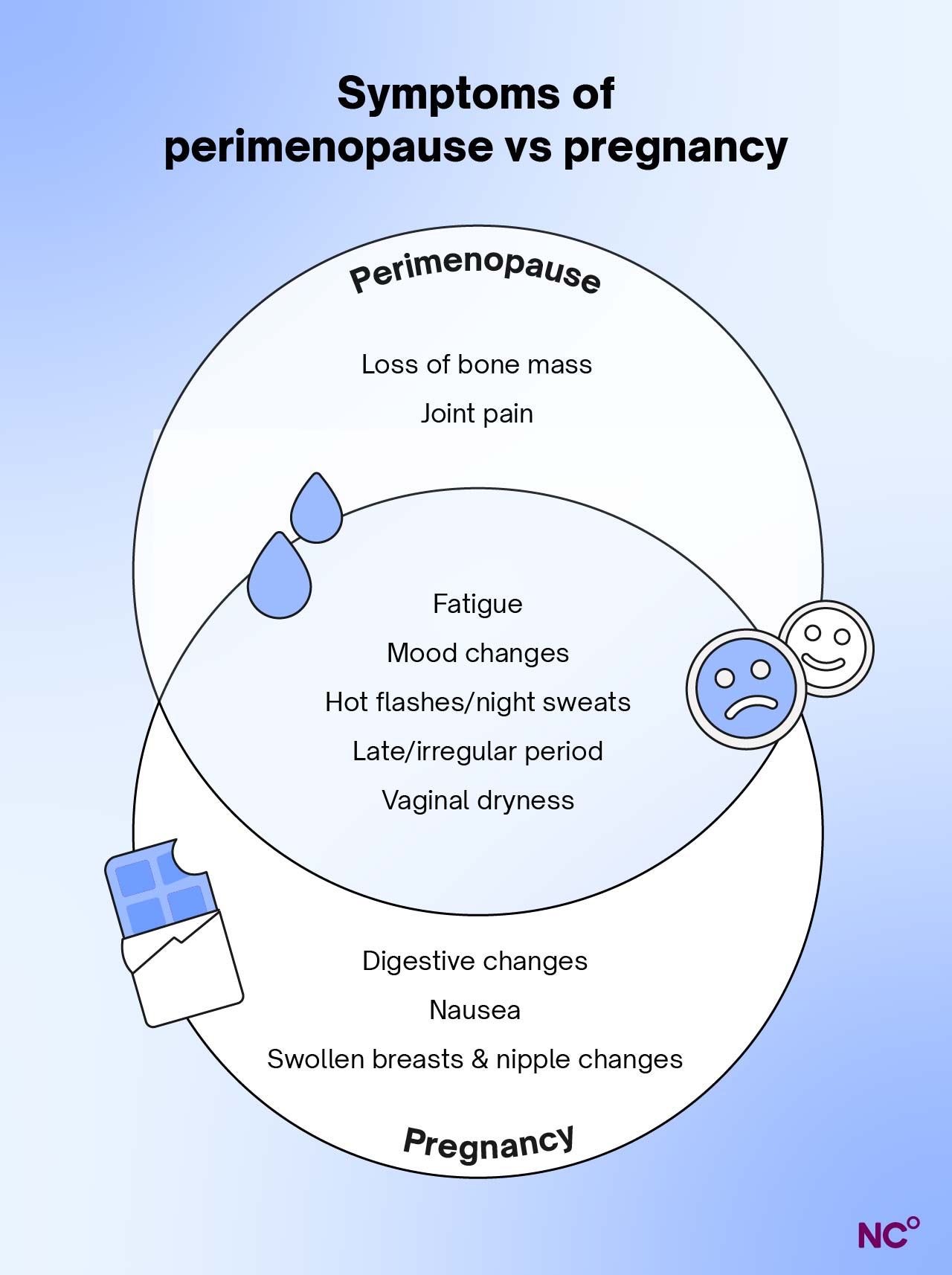
The symptoms experienced during both perimenopause and pregnancy are caused by major changes to your hormones. Even though the change is different — perimenopause is characterized by a decline in estrogen and progesterone, while these increase during pregnancy — it can actually be challenging to distinguish between pregnancy and perimenopause symptoms. Let’s take a closer look at how these symptoms overlap, and how they differ when you’re experiencing perimenopause versus pregnancy.
Symptoms seen in both pregnancy and perimenopause
Period Changes
During both pregnancy and perimenopause, the menstrual cycle changes. In fact, this is often the first sign that something is different.
If you are pregnant, missing your period is one of the earliest pregnancy symptoms. When the fertilized egg implants into the uterine wall, hormones like hCG are released that maintain the lining of your uterus and temporarily stop your menstrual cycle [1].
Leading up to menopause, which is when your menstrual cycle stops completely, declining levels of estrogen and progesterone cause period changes [2]. This can include longer or shorter periods as well as changing intensity of PMS symptoms.
Mood Changes
Another overlap between perimenopause and pregnancy symptoms concerns changes in your mood. The sex hormones estrogen and progesterone are widely understood to affect our mood by changing how our brain synthesizes and transmits different chemicals. For example, estrogen increases the production and reception of serotonin, the body’s “feel good” chemical, which is linked to mood, happiness, sleep, and memory [3].
During pregnancy, on the other hand, rapid increases in progesterone and estrogen, alongside other factors like fatigue, stress, and changes in metabolism, affect your brain’s ability to regulate your mood, which is commonly experienced as shorter-term mood swings [4]. Unfortunately, mood changes can also occur during perimenopause, like increased prevalence of anxiety and depression. Studies have found these changes to mental health are linked to both declining estrogen levels and knock-on effects from other perimenopause symptoms like fatigue [5,6].
Hot flashes and night sweats
Though primarily associated with perimenopause, hot flashes and night sweats can actually be experienced in both perimenopause and pregnancy [5,7]. These are commonly referred to as vasomotor symptoms (“vaso-“ relating to blood, “motor-“ to movement) because they involve the tightening and opening of blood vessels.
The hypothalamus in your brain works as your thermostat and maintains your core body temperature. If your core temperature gets too low or too high, it tells your body to cool off by sweating and dilating blood vessels, or tries to help it get warmer by shivering and constricting blood vessels [8].
Estrogen is believed to play an important role in stabilizing your body’s thermostat [9]. When estrogen levels decline during perimenopause or rise during pregnancy, the thermostat becomes much more sensitive to minute changes in core body temperature. This results in an exaggerated response to tiny, normal increases in core body temperature, which you then experience as a hot flash or night sweat [7].
Fatigue
The physical changes that your body undergoes during both perimenopause and pregnancy, coupled with hormonal changes, can commonly make you feel tired. This fatigue can be physical, mental, and/or emotional [6,10]. It can also be the result of other symptoms that disrupt your sleep, like night sweats.
Vaginal dryness
During pregnancy and while breastfeeding, some individuals may experience vaginal dryness, due to hormonal changes. [11] It’s common to experience vaginal dryness during perimenenopause, as the walls of the vagina become thinner as the skin cells become more slow to regenerate and less mucus is produced [12]. No matter the cause, vaginal dryness can make sex more painful, and can also just be generally uncomfortable.
Symptoms that are mainly associated with pregnancy
While there are pregnancy symptoms that can be experienced during perimenopause, here are a couple of symptoms that are unique to pregnancy:
Sensitive and swollen breasts
It is very common for breasts to become larger and more tender if you are pregnant, similar to how you might feel before getting your period. You might also have a tingling sensation, veins can become more visible as blood flow increases, and your nipples and areolas (the areas around the nipples) might become darker [10].
Nausea, with or without vomiting
During pregnancy, this is most commonly referred to as morning sickness, but it can come during any part of the day. It is usually the worst in the first trimester, but some women can experience nausea throughout their pregnancy [10]. Recent research has linked pregnancy nausea to a special hormone called GDF15, which is produced in greater quantities by the placenta during pregnancy [13].
Constipation
Hormonal changes during pregnancy slow down your digestive tract, which can make you feel constipated [14]. That is why it is important in pregnancy to get enough fiber in your diet and drink plenty of water.
Food sensitivity
Sudden or different reactions to food is also unique to pregnancy. This can include not only cravings or aversions to foods that are new to you, but also positive and negative reactions to food tastes and smells. While the causes of pregnancy-related food sensitivities are not completely understood, some scientists have suggested that these are related to the body’s inflammatory response to pregnancy [15].
Symptoms that are mainly associated with perimenopause
Decreasing bone and muscle mass
Estrogen plays an important role in helping your bones absorb calcium and maintain muscle mass [16]. As estrogen levels decline during perimenopause, bones can actually become weaker and more prone to fractures [5]. During perimenopause, decreased bone density and muscle mass can also contribute to joint pain, ligament and tendon injury, and inflammation [17].
Fertility changes
Perimenopause, which can last a few months or many years, is a period when fertility declines. The rate, however, can vary greatly. While a woman's age has traditionally been used to describe a woman’s fertility (i.e., probability of conceiving), recent studies have suggested that individual reproductive age should be analyzed based on the characteristics of your menstrual cycle as you go through perimenopause [18].
Menstrual cycles begin to change in perimenopause when the body’s hormones can no longer maintain a regular menstrual cycle amidst declining levels of ovarian follicles [5]. Ovarian follicles are the fluid filled sacs that mature into eggs. At the same time, the quality of the eggs that are released declines, which can make becoming pregnant and sustaining a pregnancy more difficult [19]. That said, current research confirms that ovulation can still occur throughout perimenopause, meaning it is still possible to get pregnant. It’s also important to keep in mind that fertility is linked to a number of factors other than perimenopause, including lifestyle and other health changes during ones’ advancing years.
Common misconceptions about menopause and pregnancy
Now that we have gone over some symptoms shared by, and unique to, perimenopause vs. pregnancy, let’s debunk some common misconceptions about both.
Perimenopause is fast
It is a common misconception that perimenopause symptoms don’t last very long, and then end quickly with menopause. The truth is that the progression of perimenopause, along with its symptoms, is very individual. Different women will experience different symptoms, to varying degrees, at different times during the perimenopause journey. Perimenopause can also last several years, with varying symptoms lasting on average between 2 and 8 years [5]. Perimenopause can even last up to 10 years for some women [20].
You will feel pregnant as soon as you conceive
Similarly, pregnancy is not necessarily something you can necessarily feel or sense immediately. While some women experience pregnancy symptoms quickly after implantation, it might take time for others. The only way to confirm a pregnancy is by visiting your doctor or midwife to confirm a positive urine pregnancy test.
Menopause only happens after age 45
While most women begin perimenopause between the ages of 45 and 55, it is also possible to begin perimenopause in your 30s. While scientists are still investigating what influences menopause age, genetics, and medical procedures like oophorectomy (removal of one's ovaries), chemotherapy, and radiation can all factor in [21].
Perimenopause and pregnancy symptoms are the same for everyone
The symptoms of perimenopause and pregnancy, which ones and their severity, are completely unique to each individual. While it is common to share commonalities of these experiences with female members of your family, like your mom, grandmother, or sister, your experience will have similarities and differences to those around you [22].
When to speak to a professional
Whether you suspect you may be pregnant or you think you are going through perimenopause, it is recommended to speak with your doctor or another healthcare professional. Similarly, if you are in perimenopause already and looking to become pregnant, your doctor can offer advice on TTC during this time.
Decode your cycle and find fertile days with Natural Cycles
When it comes to understanding your unique cycle patterns, Natural Cycles is here to help. Whether you are trying to conceive, wondering if you have started perimenopause, or both, Natural Cycles can help you decode your cycle and your symptoms. Feel supported, and take control of your fertility today with Natural Cycles.
Did you enjoy reading this article?
Frequently asked questions