What is PMOS? (Formerly PCOS)

Iona Nelson

Dr. Erica Brondolin PhD

Follows NC° Editorial Policy
At Natural Cycles, our mission is to empower you with the knowledge you need to take charge of your health. At Cycle Matters, we create fact-checked, expert-written content that tackles these topics in a compassionate and accessible way. Read more...
Key takeaways
-
Polyendocrine Metabolic Ovarian Syndrome (PMOS) is a female endocrine condition affecting reproductive, metabolic, and psychological health
-
PMOS was previously named polycystic ovary syndrome (PCOS), but the name was updated in 2026 to better reflect the whole-body impact of the condition
-
Common symptoms of PMOS include irregular periods, difficulty getting pregnant, and weight gain, though many individuals show no symptoms
-
If you have PMOS, there are several types of treatment available, from lifestyle changes to medication to IVF, depending on your symptoms and fertility journey
Polyendocrine metabolic ovarian syndrome (PMOS) is a common reproductive condition, recently renamed from polycystic ovary syndrome (PCOS) to better reflect its effects on the body. This article explains what PMOS is, its main symptoms, and what treatments are available. We’ll also explain why its new name is a pivotal moment in female reproductive health!
What is PMOS?
PMOS — which stands for Polyendocrine Metabolic Ovarian Syndrome — is a common female hormonal condition that can affect an individual’s reproductive, metabolic, and psychological health [1]. It is thought to affect around 1 in 10 women, but since many people do not show symptoms, it may be even more common than we think [2].
PMOS was previously named polycystic ovary syndrome (PCOS), which you may still see in some places. As of 2026, PCOS was renamed to Polyendocrine Metabolic Ovarian Syndrome (PMOS). This name change forms an important recognition of the full scale of the effects this condition has. The previous name focused solely on the ovaries, but we know that this condition involves additional hormonal and metabolic changes that we must acknowledge for better diagnosis and treatment [3].
What causes PMOS?
The exact cause of PMOS is still unknown, though it is thought to be a response to abnormal hormone levels, especially insulin. Insulin is a hormone that controls the sugar levels in our body, and those with PMOS often have insulin resistance, when their bodies don’t respond normally to insulin. In response, they produce even more insulin, leading to higher-than-normal levels [2].
High levels of insulin also contribute to the increase of other hormones, including androgens. Androgens are male sex hormones, such as testosterone. It is normal for females to have these hormones too, but in those with PMOS, levels are higher than normal [2].
We also know that there is likely a genetic component to PMOS, and the condition can run in families [2].
What are the symptoms of PMOS?
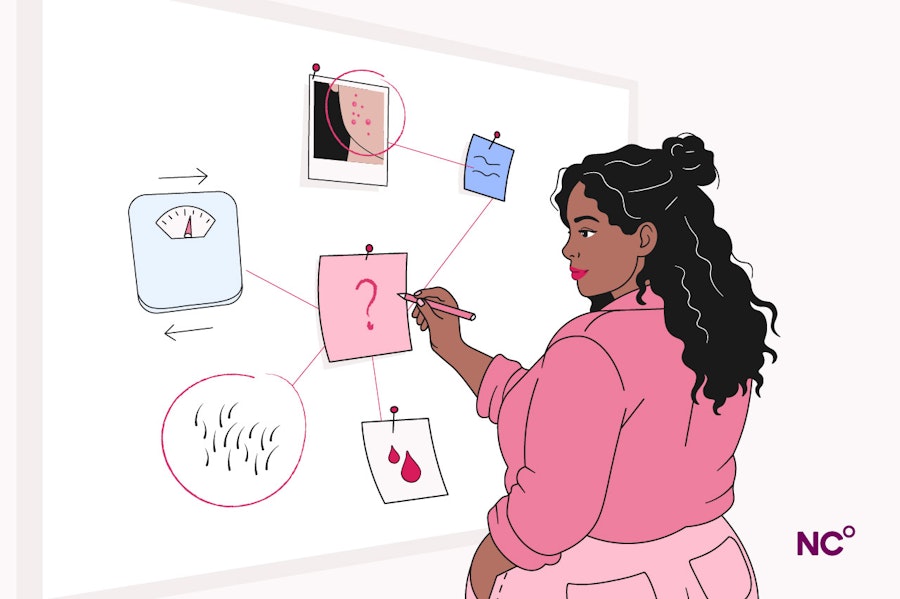
More than 50% of women with PMOS have no symptoms at all, and they experience regular periods [2]. If there are symptoms present, they can include:
- Polycystic ovaries: Despite the name of this symptom, there are actually no cysts involved with this condition, which is now much clearer with the broader condition’s renaming to PMOS. Instead, the confusingly-named symptom of polycystic ovaries involves problems with the follicles. Follicles are fluid-filled, undeveloped sacs in the ovaries in which eggs develop. With polycystic ovaries, the follicles are often unable to release an egg, which means ovulation does not take place [2].
- Irregular periods: High androgen levels and polycystic ovaries can prevent ovulation, leading to irregular menstrual cycles. A menstrual cycle in which you do not ovulate is called an anovulatory cycle, and can result in periods that are unpredictable, prolonged, or absent [2, 4].
- Difficulty getting pregnant: PMOS is thought to be one of the most common causes of female infertility [5]. Irregular or absent ovulation can make conceiving difficult, and for those without other symptoms, infertility is sometimes the first indicator of PMOS [2].
- Weight gain: Insulin has a close relationship with fat storage in the body, and insulin resistance in PMOS can lead to weight gain [2, 6].
- Hair growth: Excess androgens can contribute to body hair growth, usually on the face, chest, back, or buttocks, affecting around 7 in every 10 women with PMOS [2, 5].
- Skin problems: Similarly, high androgen levels can sometimes cause oily skin, acne, and thickened, velvety patches of skin called acanthosis nigricans [5].
Many of these symptoms can be side effects of other conditions. But if you have any concerns, you should always speak to a healthcare provider.
Diagnosis and treatment of PMOS
If you have symptoms of PMOS, your doctor or healthcare provider will first check if there are any alternative causes. For example, they may test for other hormonal conditions, such as hypothyroidism or hyperthyroidism.
Once other causes are ruled out, a diagnosis of PMOS may be made if you meet two of the following criteria:
- You have irregular periods.
- You are showing symptoms of, or have a blood test confirming, high levels of androgen hormones, like testosterone.
- You have polycystic ovaries, confirmed by a scan [2].
There is no “cure” for PMOS, but there are treatments or lifestyle changes that can help manage symptoms and improve fertility. Your doctor will recommend options depending on what your symptoms are and whether or not you are planning to get pregnant.
If you have a high BMI, your doctor may recommend weight loss. Weight can be tough to talk about, but it can have a big impact on PMOS. If you're overweight, even losing a small amount (around 5%) can significantly improve symptoms [2]. Many people find weight management difficult, so do speak to your doctor if you are struggling.
To manage irregular periods, doctors sometimes recommend the contraceptive pill or progestogen tablets (such as the mini pill). Hormonal birth control can be used to balance progesterone levels, as these can be lower for those who do not regularly ovulate. Without progesterone to balance estrogen, there is a slight increase in the risk of endometrial cancer. These medications can reduce this risk by supplying a progesterone-like hormone to help keep the endometrial lining thin and induce a period-like bleed (called a withdrawal bleed) [2, 7].
The contraceptive pill may also help manage excessive hair growth or hair loss. To slow the growth of unwanted facial hair, you may be prescribed a cream called eflornithine. In other cases, your doctor may prescribe anti-androgen medications. There are also treatments available to help with weight loss, high cholesterol, and acne related to PMOS [2].
Getting pregnant with PMOS
Without other noticeable symptoms, many people do not learn they have PMOS until they are trying to get pregnant. The good news is that, with treatment, most women with PMOS are able to conceive [2].
If you are trying to get pregnant and have PMOS, your doctor may initially recommend lifestyle changes to reduce other infertility risk factors. They may also prescribe you medication to encourage your ovaries to release an egg, such as clomifene. Metformin, a treatment for type 2 diabetes, is sometimes prescribed to lower insulin and blood sugar levels. This helps stimulate ovulation, reduce the risk of miscarriage, lower high cholesterol levels, and reduce the risk of heart disease. Similarly, letrozole can also be prescribed to stimulate ovulation. Depending on your location, these medications may not be prescribed as a PMOS treatment, but your doctor may decide they are suitable for your circumstances [2].
If medications and lifestyle changes haven’t helped with fertility issues, you may be offered in vitro fertilization (IVF). IVF is when eggs are collected directly from the ovaries and fertilized outside of the uterus. The fertilized embryo is then implanted into the uterus.
Occasionally, your doctor may suggest surgery to remove tissue that can cause excess androgens. For most people with PMOS, this is not needed and is only offered when other treatments have been unsuccessful [2, 5].
When to see a doctor
Most people who experience PMOS symptoms will notice them during their late teens or early 20s [2]. Sometimes PMOS symptoms, such as irregular periods, can be caused by natural changes, like puberty or perimenopause, or other, unrelated health conditions like stress. The occasional irregularity in your cycle is usually nothing to worry about, but speak to your doctor if you are often experiencing irregular cycles or are showing other symptoms of PMOS, for example:
- Your menstrual cycle is longer than 35 days or shorter than 21 days
- You haven’t had a period for three months or more
- Your cycle length varies by more than 7 to 9 days
- You are 15 or older and have never had a period
- You have symptoms of high androgen levels, such as excess body hair, oily skin, or acne
- You have been trying to get pregnant for over a year
[5, 8, 9]
Learn more about your menstrual cycle
Everyone’s cycle is unique to them, and the more you know about yours, the easier it is to spot anything out of the ordinary. Natural Cycles was created to empower women with knowledge about their menstrual health and fertility, and many users have learned they have PMOS while using NC°, including our own senior medical advisor and board-certified OB-GYN, Dr. Kerry Krauss.
The NC° app uses a one-of-a-kind algorithm and individual biomarkers, such as body temperature, to track the different stages of your cycle and fertile window. The NC° app can spot anovulatory cycles and will highlight any other cycle irregularities. It can also allow you to take note of additional symptoms, such as spotting, cervical mucus, and PMS. At the end of each cycle, you’ll receive a summary outlining your cycle length and anything out of the ordinary. You can also download an additional cycle report showing the last six months of data that can be shared with your doctor if you are speaking to them about PMOS or any other concerns.
Natural Cycles is FDA-cleared as hormone-free birth control, or can be used to help you plan a pregnancy or track your perimenopause journey. Whatever your goals are, discover more about your body with Natural Cycles.
Did you enjoy reading this article?
Frequently asked questions