How to use ovulation strips: Most accurate types & what a positive result looks like

Lucy Abrams-Husso

Agathe van Lamsweerde

Follows NC° Editorial Policy
At Natural Cycles, our mission is to empower you with the knowledge you need to take charge of your health. At Cycle Matters, we create fact-checked, expert-written content that tackles these topics in a compassionate and accessible way. Read more...
Key takeaways
-
Ovulation strips are a useful tool for helping pinpoint when you ovulate, which is key to planning or preventing pregnancy and can be useful for anyone wanting to learn more about their reproductive health
-
The most common ovulation strips detect the surge in luteinizing hormone (LH), which typically occurs within 24 to 48 hours before ovulation [1]
-
If you are trying to conceive or prevent pregnancy, it’s highly recommended to combine ovulation tracking with another method of fertility awareness, like measuring your basal body temperature or keeping an eye out for any changes to your cervical mucus
You’re probably familiar with at-home pregnancy tests, but did you know that you can also take a similar type of test to figure out when you’re due to ovulate? In this article, we’ll cover the ins and outs of ovulation strips and other ways to monitor for ovulation. Ovulation tracking helps determine your fertile window, which is the duration of time you’re able to get pregnant each menstrual cycle. We’ll also go over some FAQs on ovulation, interpreting results, and planning or preventing pregnancy.
Ovulation and fertility
Ovulation typically occurs once per menstrual cycle, when the female egg cell is released from the ovary. Whether you are trying to plan or prevent a pregnancy, knowing when you ovulate can be extremely useful. With traditional fertility awareness methods, knowing when ovulation occurs requires monitoring for specific signs and symptoms, like rising basal body temperature (BBT) and changes to your cervical mucus [2]. Ovulation tests, which detect ovulation-related changes in hormones, provide an easy and reliable way to help you understand your fertile window better.
The length and proportion of phases in the menstrual cycle can vary greatly between individuals, and from one cycle to the next, but ovulation occurs 17 days after the start of your menstrual cycle on average (the first day of your period is day one) [3]. After ovulation, an egg cell can typically survive for only around 12-24 hours. By contrast, sperm can usually survive in your reproductive tract for around five days. These combined six days are what is commonly referred to as the fertile window, or short span of time each cycle when having unprotected sex is most likely to result in pregnancy.
Can I use an ovulation app, or should I use an ovulation kit?
Ovulation apps and ovulation strips, or kits, can both be used to help track ovulation, which is key to timing intercourse, diagnosing ovulation-related issues like anovulation, and determining the fertile window for those with irregular cycles. There are benefits to using both methods, you can use either one or both. For example, studies have shown that Natural Cycles, the first and only FDA cleared birth control app, is more accurate when it comes to calculating the fertile window compared to calendar methods and provides you a more precise estimation of when to time intercourse [4].
Natural Cycles uses basal body temperature tracking and user-provided period data to estimate your daily fertility status and calculate your fertile window. The app can be used with or without ovulation tests, which are simple urine sampling tests that can be done at home, like pregnancy tests. Ovulation strips, or kits, were developed to detect surges in different hormones that are linked to ovulation. The most common tests detect a sudden increase in luteinizing hormone (LH), which usually happens just before ovulation.
Why should I use an ovulation kit?
Ovulation kits, or ovulation predictor kits, are straightforward ways to monitor your body for hormonal signs of ovulation in the comfort of your home. Urine hormone testing for ovulation is considered reliable and accurate, making it very popular with patients and health professionals. It can also be used for those with regular or irregular cycles. [5]
When is the best time to use ovulation kits?
Most LH test kits recommend beginning testing on days 10 or 11 of your cycle and testing for many days, until a positive test result. Studies have shown, however, that beginning testing earlier – around day 7 – and continuing testing longer can be a better predictor of ovulation and the fertile window [5]. Natural Cycles provides you with personalized predictions on when to test for LH, from cycle day 7 onwards, based on your past ovulation patterns. It not only recommends when to start testing, but how frequently you should test as you approach your estimated date of ovulation. The app adapts in real-time as you log test results and lets you know when you can stop, so you never test more than you need to.
How accurate are ovulation tests?
Ovulation prediction kits test typically test for one or more of the following hormones: estrone-glucuronide (E1G or E3G, types of estrogen), LH, and pregnanediol-D-glucuronide (PdG, a type of progesterone). Estrogen typically rises towards the beginning of the fertile window, while a surge in LH usually indicates ovulation will occur within the next 24-48 hours. Unlike LH tests, progesterone-level testing can confirm that ovulation occurred. It has also been used to try to assess the quality of ovulation and determine health of the luteal phase, but experts disagree on the usefulness of progesterone testing for these purposes [6].
For a number of reasons – practicality, accessibility, affordability – using a combined ovulation test that tests for all three hormones month after month might not be possible. If using the more common LH urine hormone test, it’s helpful to know that the majority of women experience a detectable surge in LH before ovulation, but not all. It is also possible to ovulate without a detectable LH surge, or to experience an LH surge without ovulation. For this reason, if you are using an LH-detecting ovulation kit, it’s usually recommended to combine LH testing with another method that can confirm ovulation happened, like measuring your BBT.
It’s also good to know that because LH tests are linked to ovulation, a positive test alerts you only to the last couple days of your fertile window when you are actually due to ovulate. Therefore, using ovulation tests on their own cannot be used to prevent pregnancy, since you’re already fertile by the time that a test would give a positive result. [5]
Do hormonal contraceptives affect the results?
Hormonal contraception most often works by using hormones to suppress ovulation, and therefore, you are unlikely to experience a surge in LH if you are on hormonal birth control. If you stop hormonal birth control, and are looking to either become pregnant or still prevent pregnancy, there can be a short delay before ovulation and menstruation returns [7].
Different types of ovulation test/kits
Ovulation tests, or kits, can test for different hormones in our urine. It’s important to understand which hormone, or hormones, are being tested for with the kit you are using so you know how best to interpret and use the results. Positive results on an estrogen test usually indicate the beginning of the fertile window, positive results on an LH test tell you that you will soon ovulate (the last couple of days of the fertile window), and progesterone testing can be used to confirm that ovulation occurred.
Urine tests typically fall into three categories: test strips, digital tests, and fertility monitors. Test strips are the most basic and common. A 2024 study found that the accuracy of these strips is similar across several popular brands, regardless of price [8].
It is also possible to test for ovulation using a saliva testing kit. These work differently from traditional urine test strips and are becoming more popular. Just as with traditional urine tests, saliva testing isn't a clear-cut way to detect or confirm ovulation, and it doesn’t work for everyone [9].
How do I read the ovulation kits?
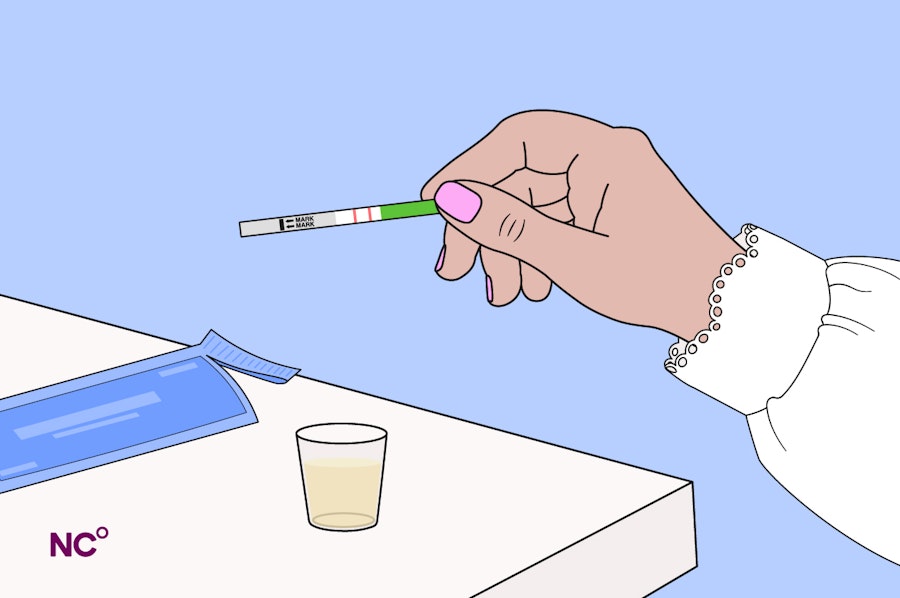
Ovulation kit results are read slightly differently depending on the type of test used. Test strips are read like pregnancy tests, with one big difference. Whereas any second line on a pregnancy test means the result is positive, the positive line on an ovulation strip must be as dark or darker than the control line.
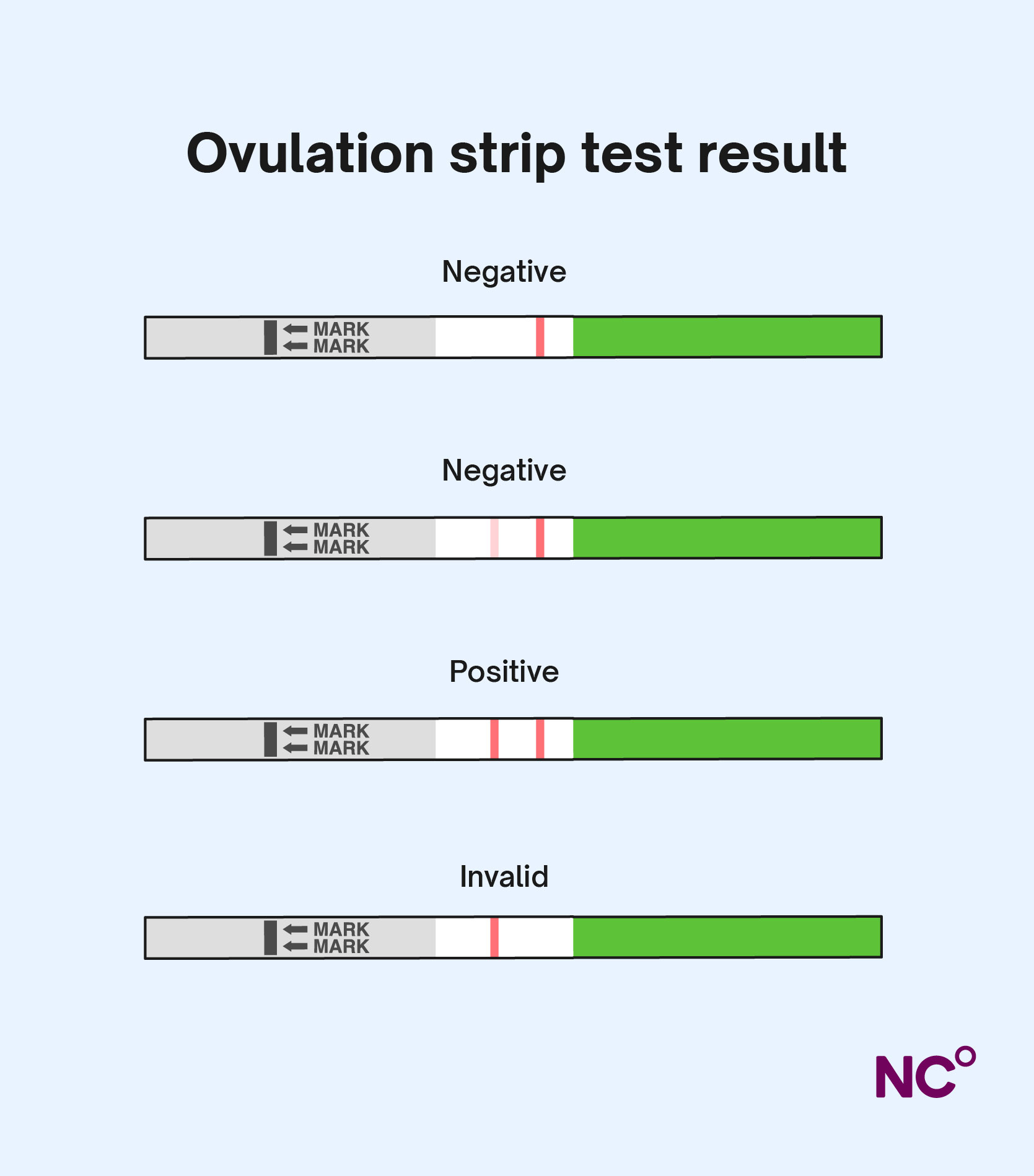
If you’re using the Natural Cycles app to plan or prevent pregnancy, you can make use of our handy Ovulation Test Reader. Simply scan your test with your phone’s camera, and this feature can help you interpret the result of your ovulation test strips.
Digital tests are like test strips, but they often test for multiple hormones, not just LH. They are also read by being inserted into an electronic reader. The result will come as a symbol, like a smiley face or words, rather than a line. For this reason, digital test strips can be simpler to interpret than traditional strip tests.
Finally, fertility monitors typically use a test strip in combination with a reader that can attach to a smartphone and an app to interpret results. These monitors are more expensive, but typically test for multiple hormones.
Tips to improve fertility
If you’re trying to conceive there are things you can do to try and prepare your body for pregnancy. Physical, mental, and emotional health all play a big role in trying to conceive.
-
Track your cycle: If you’re trying to become pregnant, one useful step is tracking your cycle to try and determine when you are ovulating. There are only around six days each month when having unprotected sex can result in pregnancy, and identifying this window as accurately as possible is key
-
Eat well: ensuring you’re eating a balanced diet fuels your body and helps it prepare to create and grow a new life. Everyone is different, and each body has its own needs, but ensuring you are regularly getting fresh fruits and vegetables, lean protein, whole carbohydrates, and healthy fats is a great place to start.
-
Limit your stress: studies have shown that stress can effect your menstrual cycle, including stopping or delaying ovulation [10]. This is because stress affects how we naturally balance our hormones, and hormones are what drives our menstrual cycle.
-
Consider vitamins: folic acid is recommended during pregnancy, but doctors generally advise starting before trying to conceive [11]. You can also start prenatal vitamins before conceiving, but be sure to read the labels and to check with your doctor before starting.
-
Limit caffeine and alcohol: you might be aware that it's recommended to limit caffeine and abstain from alcohol when pregnant, but studies have also shown that limiting intake of both can help if you are trying to conceive. Scientists are still investigating the exact “how” and “why”, but increased intake of both is linked to decreased probability of conception and implantation rates [12].
-
Optimize sex in the fertile window: if you are trying to conceive, pressure around having sex, when to do it, and how, can sometimes feel overwhelming. Rather than targeting sex exactly when you ovulate, try to remember to use the entire fertile window. And position doesn’t matter – if it feels good for you and your partner and a sperm can reach an egg, that’s all that matters [13].
Ovulation tracking and more with Natural Cycles
Natural Cycles uses your temperature, period, and other cycle-related data to help you find your fertile window. If you are looking to prevent pregnancy, NCº Birth Control is 93% effective with typical use and 98% effective with perfect use, without any of the side effects of other forms of birth control. And if you’re trying to conceive, NCº Plan Pregnancy identifies your fertile window with greater accuracy. Research has shown that using Natural Cycles to plan a pregnancy helps couples conceive in three cycles on average [14]. Why not see if Natural Cycles is right for you today?
Did you enjoy reading this article?
Frequently asked questions