Shaving pubic hair: Step-by-step guide & tips to avoid irritation

Freya Eriksson

Agathe van Lamsweerde

Follows NC° Editorial Policy
At Natural Cycles, our mission is to empower you with the knowledge you need to take charge of your health. At Cycle Matters, we create fact-checked, expert-written content that tackles these topics in a compassionate and accessible way. Read more...
Key takeaways
-
The main purpose of pubic hair is to protect the vagina and the sensitive skin on the vulva from dirt and bacteria
-
Choosing to groom your pubic hair is a personal choice, with options including shaving, trimming, waxing, or not doing anything at all
-
If you choose to shave, it’s important to do it safely, following instructions and with the necessary preparations and aftercare
Pubic hair — it’s something so natural, and yet it triggers so many emotions and opinions. Most of us have probably felt some sort of pressure around what our pubic hair looks like and whether or not to groom it. In this article, we’ll dive into what the science says about the purpose of pubic hair, if shaving makes us more hygienic (spoiler: it doesn’t), plus a step-by-step guide on how to shave down there if that’s something you want to do.
What is the purpose of pubic hair?
All mammals (including humans) have body hair. We know that pubic hair is linked to our hormones, which is why it starts to grow during puberty, but the exact purpose of pubic hair isn’t entirely known. A likely explanation is that it, much like hair we have on other parts of our bodies, is there as a type of protection. Pubic hair creates a barrier that helps keep bacteria from getting into the vagina. It also protects the sensitive skin on the vulva and the rest of the pubic area from friction, both during sex and other activities [1].
There are also a few other ideas about why we have pubic hair. Some believe that it has to do with increased sensitivity (and pleasure) during sex. Another theory is that it has to do with sexual attraction [1].
Is it more hygienic to shave pubic hair?
The short answer is: no. A quick online search might give the impression that we should shave our pubic hair because it’s more hygienic than leaving the hair as it is naturally. Even though “feeling clean” is a common reason why women choose to shave, it’s a myth that it’s actually more hygienic [2]. Historically, it was used to help reduce pubic lice, but this is most often not a concern anymore [1].
Regardless of what preferences you have when it comes to shaving (it’s your choice, after all), we believe that knowledge is power when it comes to our own bodies. We have pubic hair for a reason, and part of that is keeping bacteria and dirt out of our vagina. Of course, pubic hair will trap sweat, bacteria, and dead skin cells, but cleaning your vulva (not your vagina) regularly with water or a mild soap easily solves that.
Why do women shave?
Because of how pubic hair is usually portrayed in our society (that is, as something to be removed), it’s easy to think that everyone else is hair-free at all times, and that this is what’s “normal”. However, research looking into how people actually groom their pubic hair has found that it’s more complex than a simple “everyone does it”. First off, not everyone grooms down there, and for those who do, the reasons why vary.
At the same time, it’s clear that our society shapes how we think about pubic hair. There’s certainly a cultural component to this, with Western cultures being more prone to pubic hair removal. Women are also more likely to do it than men (and are more likely to experience pressure around removing pubic hair) [3].
One 2024 study, which included 522 US women between the ages of 18 and 85, found that 62% had removed pubic hair at some point in their lives, and roughly 50% had done so in the last 30 days [2]. These numbers are a little lower than previous similar studies — a 2016 study with 3372 women found that almost 84% did it [4] — but it’s clear that grooming pubic hair is a common practice among women, even though not everyone does it.
Hair removal is more common among younger women, which likely has to do with how it’s been portrayed over time, for example, in movies, advertisements, and porn. While reasons for grooming pubic hair vary, the most common motivations in studies looking into this are that it makes the respondents feel clean or that they feel they look better after grooming [2].
Shaving is a personal preference
While we can make the case that removing hair has become fashionable and we may feel societal pressure to conform, the truth is that shaving, or removing pubic hair in any way, is a personal preference. You always have the right to choose what’s best for your body, and you should never have to base your decision on other people’s preferences.
The question of cleanliness is one that often comes up when it comes to shaving pubic hair, but (as we touched on earlier), it’s a myth that shaving is automatically more hygienic [2]. Washing the vulva regularly is usually enough — and remember that the vagina itself is self-cleaning!
All in all, the choice of whether or not to shave comes down to your own personal preferences.
Are there risks with shaving?
Not only is it a myth that shaving equals clean, but there are also some potential risks with shaving pubic hair that can be good to be aware of:
-
Skin irritation: Shaving creates small cuts in your skin, even if they might not be visible to the naked eye. This can result in itchiness, skin irritations, razor burns, or rashes. If bacteria get into the cuts, you may get an infection (that’s why it’s so important to use a clean and sharp razor — more on that later) [5].
-
Ingrown hairs: Ingrown hair happens when hairs get trapped under the skin, which can cause bumps that may feel itchy or irritated. They are more common on areas where you shave, especially if you use a blunt razor or shave against the hair [6].
-
Higher risk of certain STIs: Research has found that those who shave may have a slightly higher risk of getting some sexually transmitted infections (STIs), such as chlamydia or gonorrhea. The reason why is not entirely clear, but it’s possible that it’s due to the microscopic cuts that shaving causes making the skin more susceptible to some infections [5, 7].
-
Recurrent UTIs: There’s also some research to suggest that the risk of getting recurrent UTIs increases with frequent grooming (meaning if it’s done at least weekly). The theory behind it is that pubic hair acts as protection from bacteria, and that shaving removes this protection and potentially also some of the good microbiome in the area [8].
Now, it’s important to know that if you’re careful and take it slow and steady (and keep your tools clean), shaving is usually a safe way to remove hair in your bikini area. However, it’s still good to know about the risk so you can take the proper steps and precautions.
Men and pubic hair trimmingOf course, it’s not just women who groom their pubic hair — some men do as well. However, studies have found that men generally feel less pressure around trimming their pubic hair, and bodily hair growth is usually more accepted in men [9]. |
Step-by-step guide to shaving pubic hair
Now that we’ve covered some background info, let’s dive into our step-by-step guide to how to shave down there.
Step 1: Make sure you have the right tools
The first thing you need is to make sure you have the right tools. An electric trimmer can be a good thing to start with if you have longer pubic hair, or you can trim your hair with scissors if you prefer.
For a closer shave, you’ll also need a razor. Make sure the blade is sharp — that will help you avoid irritation when shaving. Change blades regularly (at least after every few shaves), and if you notice that the razor pulls on your hair, replace the blade with a new one. Don’t share your razor with others.
Lastly, a mirror can be helpful for getting the details right in the trickier areas!
Step 2: Prepare your skin
Your skin will be easier to shave, and it’s less likely to become irritated if you prepare a little bit first. Jump in the shower or a bath for a few minutes; the warm water will help soften the hair and prepare your skin for shaving.
If you want, you can also try gently exfoliating your skin around your bikini area to remove dead skin cells ahead of shaving. You can use a scrub or loofa — just make sure you’re not too rough on your skin.
Step 3: Apply shaving gel or cream
Shaving gel or cream helps the razor glide over your skin when you shave, so it’s key to avoid irritation. Apply a good amount to start with and reapply when needed as you go!
Step 4: Shave with the hair
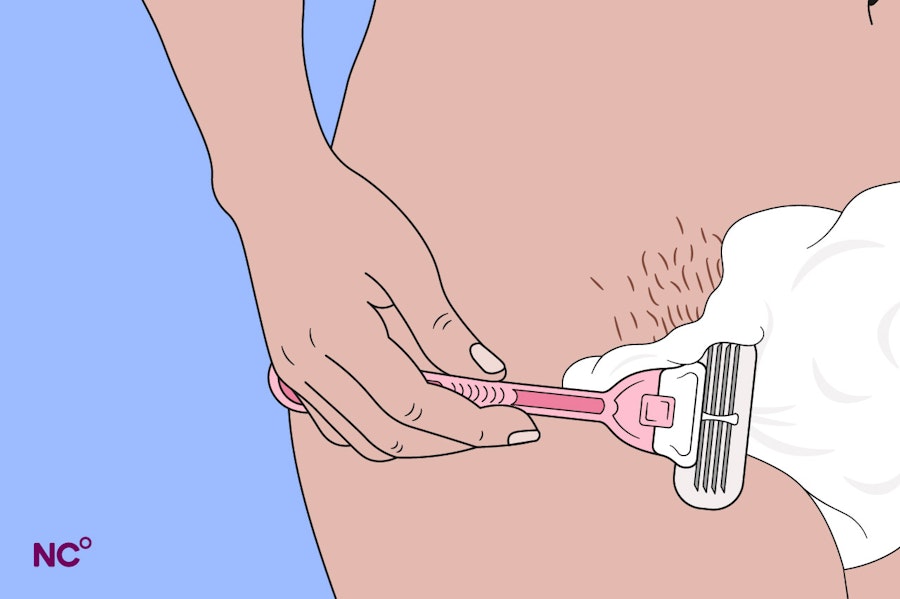
Get into a comfortable position and use light strokes. Standing has actually been found to reduce the risk of injuries while shaving, since it’s easier to see what you’re doing [5].
Avoid pressing the razor into your skin (the razor should do the work for you if it’s sharp enough) and try to shave in the direction that your hair grows. This will help you avoid irritating the skin, which can cause ingrown hairs and bumps. Pubic can grow in different directions, so you may need to switch directions as you go. If you need to shave against the grain sometimes, that’s okay — just take it slow and steady.
Rinse the razor often (and, again, reapply shaving gel if you need to). Here, you can also use a mirror to better see what you’re doing.
Step 5: Rinse and pat dry
Once you’re done, rinse off with cool water to get rid of any remaining loose hairs and shaving gel. Pat your skin dry with a clean towel.
Step 6: Moisturize and avoid irritation
Apply a lotion or moisturizer to rehydrate your skin. This helps calm your skin and reduces irritation or itchiness after shaving.
It can also be a good idea to wait a little before putting on clothes, to let your skin settle down first. Try to avoid harsh fabrics or other irritants.
Step 7: Take care of your tools
Lastly, make sure you rinse your razor so it’s free from hair and shaving gel, and let it dry. To keep it clear of bacteria, you should store it somewhere dry — don’t keep it in the shower.
Other types of hair removal
If shaving isn’t your thing but you still want to do some type of pubic hair removal, there are also several other options you can explore to find one that works for your body.
-
Trimming: This is a great option if you don’t want to remove your pubic hair completely, but you still want to keep it to limit full hair growth. You can use an electric trimmer or a pair of scissors, and you can also combine trimming certain parts of your pubic area with shaving or other hair removal methods if you prefer. Trimming is usually a safe method since you don’t cut the hair so close to the skin, meaning you’re less likely to cut yourself or cause irritation.
-
Waxing: Waxing involves pulling the hairs out by the root by applying wax to the area, either using an at-home kit or at a salon. Waxing will usually result in smoother skin and the hair stays away for longer — up to several weeks — but it can potentially cause skin irritation or burns. However, it’s been found to cause fewer injuries than shaving [10]. Hygiene is important here, and it’s best to get it done by a professional if you can (make sure you choose one that doesn’t double-dip the stick into the wax) [11].
-
Sugaring: Similar to waxing, sugaring removes hair from the root, which means you’ll stay hairless for longer. It’s done by applying a type of paste that consists of lemon, water, and sugar, which is then used to pull the hairs out in the same direction they grow. Sugaring is considered more gentle on the skin compared to waxing, but it may still cause some irritation. Again, this is best done at a professional salon.
-
Laser hair removal: This type of long-term hair removal uses laser technology to vaporize hairs at the follicles. Because there are some potential side effects involved, such as burns or permanent pigment changes, it should always be done by a licensed dermatologist to ensure the safest possible treatment. You can expect some redness or swelling after the appointment, but it should settle down after a while [12].
-
Hair removal creams: These creams or gels contain chemicals that work by dissolving the hair. They can be bought over the counter for home use — just make sure it's safe to use on the bikini area. You apply the cream, wait, and rinse it off. However, it’s worth noting that the chemicals can be rough on the skin and cause irritation, so it’s always a good idea to test on a small area first [11].
Get to know your body better with Natural Cycles
Here at Natural Cycles, we believe in empowering you with the knowledge you need to take charge of your wellbeing. Whether or not you choose to shave, knowing your options and understanding your own motivations can be powerful tools for getting to know your body. The NC° app can add another layer of self-knowledge to your toolkit: the FDA-cleared, temperature-powered algorithm behind the app analyzes your unique menstrual cycle to give you fertility insights you can use to prevent or plan a pregnancy, or simply to help you understand how your cycle affects your wellbeing.
Did you enjoy reading this article?
Frequently asked questions