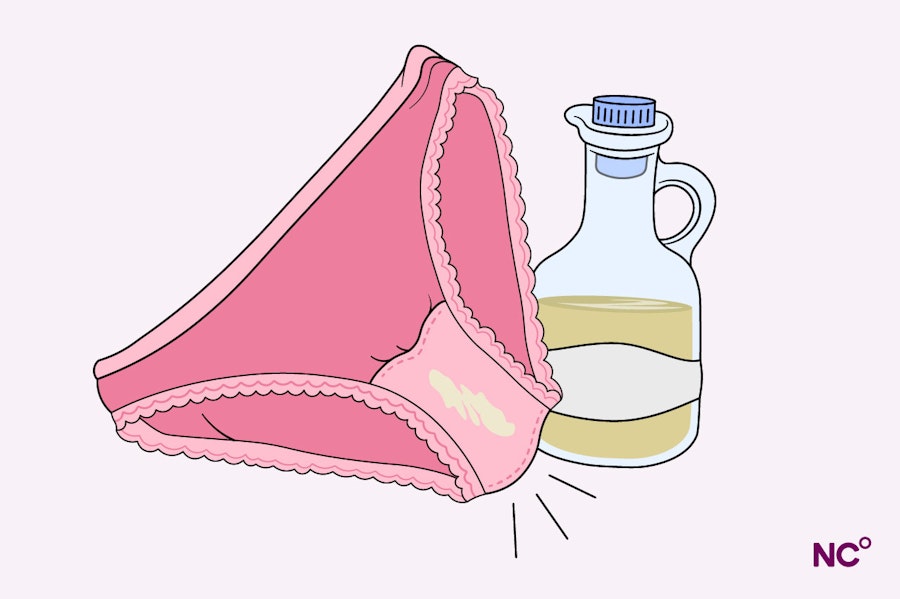
Why does my discharge smell sour?

Iona Nelson

Dr. Danielle Perro

Follows NC° Editorial Policy
At Natural Cycles, our mission is to empower you with the knowledge you need to take charge of your health. At Cycle Matters, we create fact-checked, expert-written content that tackles these topics in a compassionate and accessible way. Read more...
Key takeaways
- It is not uncommon for vaginal discharge to smell very mildly sour, due to the vagina’s acidic environment and microbiome activity
- Menstrual cycle phases, diet, and infections can influence the smell of your discharge
- Any strong smells, especially if accompanied by other symptoms, may indicate an infection such as bacterial vaginosis or a yeast infection
Vaginal discharge is a normal part of a healthy female reproductive system, and the amount and type of discharge varies throughout the menstrual cycle. But what happens when we notice sour-smelling discharge? This article will explain what vaginal discharge usually smells like, why your discharge may smell sour or like vinegar, and how to prevent unpleasant vaginal smells.
What does normal vaginal discharge smell like?
Normal vaginal discharge has no smell or a very mild, sour scent. This is because your vagina has an average pH between 3.8 and 5.0, which is relatively acidic [1]. Healthy, normal discharge usually looks clear or white, and it is normal for its colour, texture, and volume to vary throughout your menstrual cycle [2].
Why does my discharge smell sour?
Sour-smelling discharge and the acidic environment of your vagina are due to the presence of bacteria. You might have heard the term “microbiome” used to discuss gut health, but our bodies have several microbiomes, including in our vaginas.
A microbiome is a community of microorganisms; in this case, a healthy vaginal microbiome is mostly made up of bacteria [3]. Our vaginal canals host billions of “good” bacteria that help us fight infection and inflammation, and the most dominant strain of bacteria in the vaginal microbiome is Lactobacillus [4]. The metabolic activity of lactobacillus and other bacterial strains produces the slightly sour smell we encounter [5]. This is similar to the reaction that occurs when baking bread, and is why the smell is sometimes compared to yeast or sourdough!
While a slightly sour smell may be normal for some, remember that everyone is unique, and what others experience might not be the same for you, and vice versa.
Other common vaginal odors and their causes
There are several common vaginal odors you may experience that can be caused by your menstrual cycle phase, infection, or another cause. Odors include:
- Fishy: A strong fishy smell in your discharge often indicates an infection. Bacterial vaginosis (BV) is a common vaginal infection that may cause a fishy odour and discharge that looks gray and watery, but it can also be symptom-free [6]. Trichomoniasis is a sexually transmitted infection that can also cause a fishy vaginal odor, often accompanied by yellow-green, frothy discharge, pain while urinating, and irritation around the vaginal area (also known as vaginitis) [7].
- Metallic: A metallic smell (like coins) usually suggests the presence of blood. This could be due to an oncoming period or vaginal irritation, for example, after sex. Speak to your doctor if you notice any bleeding between periods.
- Ammonia: If you think your discharge smells like ammonia or cleaning products, it may be urine you are smelling. As your vagina and urethra are close to each other, sometimes urine can make its way into your vaginal area. In particular, urine odor may be more noticeable if you are dehydrated or have a urinary tract infection (UTI).
- Rotten: A rotten or foul smell, especially when accompanied by bleeding, could suggest that something has been left inside your vagina, such as a tampon or diaphragm [8]. Speak to your doctor as soon as possible if this applies to you, as foreign objects left in the vagina can sometimes lead to infection and increases the risk of developing toxic shock syndrome (TSS). Though it is rare, TSS requires urgent care, so if you think you may have TSS, seek medical attention immediately.
- Yeasty: A disruption in the vaginal microbiome balance can cause a yeast infection, such as thrush. The main symptoms are discharge with a cottage-cheese texture and irritation [9], though it can sometimes cause a strong, yeast-like smell.
What else affects the smell of my discharge?
Lifestyle factors, hormonal changes, and sexually transmitted infections (STIs) can also change the smell of your discharge. Let’s take a closer look:
- Diet: Did you know that diet can affect your vaginal microbiome? The food and drinks we consume — particularly glucose, animal proteins, and alcohol — can influence the types and levels of bacteria found in the vagina, and therefore the smell of your discharge [10]
- Sweat: The area around your vagina has apocrine sweat glands, a type of gland found in the genital region after puberty [11]. If you have been exercising, spending time in hot climates, or wearing tight, non-breathable clothing, and you are unable to wash soon after, you may have a buildup of sweat, which can cause a strong smell.
- Hormone changes: The consistency and look of your discharge and cervical mucus change throughout your menstrual cycle, and so can the smell. Around the time of your period, you may notice your discharge smells more metallic. One small study suggested that discharge odours are more pungent in the menstrual and luteal phases of the menstrual cycle than in the follicular and ovulatory phases [12], and a separate small study found the same trends in body odour [13].
- Sex: While the vagina is acidic, semen is more alkaline, and the presence of semen in the vagina can change your pH level and cause an imbalance in the microbiome [1].
- Antibiotics: Antibiotics are a category of medicines designed to kill or stop the spread of bacterial infections [14]. Unfortunately, they cannot distinguish between beneficial and pathogenic bacteria and can upset the balance in your otherwise healthy microbiome.
- Sexually transmitted infections (STIs): Alongside vaginal infections like BV and thrush, sexually transmitted infections can change the smell of your discharge. Chlamydia is a common STI that, though it is often asymptomatic, can cause abnormal and strong-smelling discharge [15].
How to prevent unpleasant vaginal odor
When trying to prevent unpleasant discharge smells, the first thing to know is that your vagina is self-cleaning. Vaginal discharge is actually your vagina’s way of staying moist, keeping clean, and protecting itself from infection [16]. There are ways that you can help your body do its job, though.
- Practice good hygiene. Though your vagina is self-cleaning, keeping your vulva (the area outside of your vagina) clean with water or non-scented soap helps to prevent infection and sweat buildup [16]. Do not douche or clean inside your vagina, as this can disrupt the vaginal flora and potentially lead to infection [2]. Always wipe front to back when using the bathroom, and change out of sweaty clothes as soon as possible after your workouts.
- Wear loose, breathable fabrics. Synthetic fabrics like polyester aren’t breathable, which makes it easier for sweat and moisture to build up. Opting for loose-fitting natural fibers, such as cotton, merino wool, or bamboo, helps your body wick away moisture and let sweat evaporate.
- Choose unscented period products. Scented menstrual products can throw off the pH balance of your vagina and lead to irritation [17]. Opt for fragrance-free options where possible, to avoid irritation and upsetting your microbiome balance. Tracking your period can help you prepare in advance and reduce the chance of being caught unprepared.
- Eat a healthy, balanced diet. Eating a balanced diet rich in fruit and vegetables can support a strong immune system and help your body fight vaginal infections. In particular, increasing your intake of linolenic acid (through foods such as nuts and seeds) and reducing your alcohol and sugar consumption can help support the vaginal microbiome [10]. Probiotics found in yogurt and other fermented foods help maintain a balanced pH level in the vagina, support the immune system, and prevent the development of pathogenic bacteria [18]. They can be particularly helpful in counteracting the effects of antibiotics and rebalancing the microbiome after a yeast infection [19], but speak to your doctor before taking any probiotic supplements.
- Optimize sleep. Getting a good night’s sleep also helps your body to regulate its immune system [20]. Most adults need between seven and nine hours of sleep, but this can vary between individuals [21].
When to see a doctor about discharge
If you think your sour-smelling discharge could be a sign of infection, speak to your doctor, especially if you notice [16]:
- A strong odour that doesn’t go away after a few days
- An unusual discharge colour, such as green, gray, or yellow
- An unusual discharge texture, such as appearing like cottage cheese
- Itching, pain, swelling, or sores around the vulva or vagina
- Bleeding between periods or after sex
- Pain during sex or when urinating
- Pain in the area between the stomach and thighs, i.e., pelvic pain
Track your discharge with Natural Cycles
Track your vaginal discharge and other menstrual symptoms throughout your cycle with Natural Cycles. The NC° app is also FDA-cleared as non-hormonal birth control, powered by a state-of-the-art algorithm that analyzes body temperature and cycle characteristics to determine your ovulation date and fertile window. No hormones, no side effects, just certified birth control that’s 93% effective with typical use. Take control of your menstrual health today!
Did you enjoy reading this article?
Frequently asked questions