How long does it take for progesterone to work?

Iona Nelson

Agathe van Lamsweerde

Follows NC° Editorial Policy
At Natural Cycles, our mission is to empower you with the knowledge you need to take charge of your health. At Cycle Matters, we create fact-checked, expert-written content that tackles these topics in a compassionate and accessible way. Read more...
Key takeaways
-
Progesterone is a natural hormone that plays an important role in the menstrual cycle and in supporting pregnancy
-
There are a number of different birth control methods that also contain a form of synthetic progesterone (progestins), these include oral methods like the mini pill and long-acting methods like the hormonal implant and IUD (coil)
-
Progesterone and synthetic progestins are sometimes also prescribed for managing irregular cycles, perimenopause support, or fertility treatment
-
If taken orally, progesterone levels peak just a few hours after taking it, but whether you will notice its effect on your fertility or symptoms may depend on why you are taking it, amongst other factors like the dosage or way it is administered
-
Always speak to your doctor if you are considering hormonal treatment to make sure you are getting the best option for your personal needs
On this page
Hormones play a critical role in our reproductive and sexual health. But did you know some hormones can be prescribed to support fertility goals, alleviate perimenopause symptoms, and help regulate conditions that affect your menstrual cycle? Progesterone is a commonly prescribed hormonal treatment. If you are considering using it, it’s important to understand how it works in your body. Read on to learn what progesterone is, why it can be prescribed, how long it takes for progesterone to work, and side effects to be aware of.
What is progesterone?
Progesterone is a natural sex hormone found in both men and women [1]. For women, it plays a critical role, alongside estrogen, in the menstrual cycle and pregnancy. Progesterone levels are high in the luteal phase of the menstrual cycle, as it helps prepare your uterine lining for potential pregnancy [2]. If a fertilized egg implants and pregnancy begins, progesterone levels stay high to prevent the lining from shedding, prepare the breasts for milk production, and create a supportive environment for the growing embryo [3]. If pregnancy doesn’t happen, progesterone levels drop, and your uterine lining leaves your body as your period.
Why is progesterone prescribed?
Because progesterone plays a vital role in the female reproductive system, your doctor may prescribe it to help with fertility goals or medical conditions. It is often prescribed alongside estrogen as combined therapy. But there is a slight increased risk of stroke, blood clot, or heart attack with oral estrogen treatments. For some people, such as smokers or those who experience migraines with aura (i.e. visual disturbances), a progesterone-only treatment might be prescribed instead [4]. Here are some of the main reasons your healthcare provider might recommend taking progesterone or combined hormonal treatment.
Birth control
If you are looking to prevent pregnancy, you might consider taking hormonal birth control. There are two options: combination birth control, which provides both progesterone and estrogen, or progesterone-only. Combination birth control typically works by preventing ovulation — the release of a mature egg cell — from happening. It can come in the form of pills, patches, or vaginal rings [4]. Progesterone-only birth control doesn’t always stop ovulation, but prevents pregnancy in other ways, such as thickening cervical mucus or thinning the lining of the uterus. It can be taken in the form of pills (known as the mini pill), shots, a hormonal IUD, or implants [5]. Birth control is also sometimes prescribed to manage severe PMS or heavy periods, and may help reduce the severity of both psychological and physical symptoms [2, 6].
There is no one-size-fits-all when it comes to birth control. The best choice of contraception for you depends on many factors, including medical history, future family planning, potential side effects, and personal preference. It is important to talk through everything with your doctor so they can make the right recommendation for you.
“Talk with your gynecologist about your particular situation, including your preferences, concerns, anatomy and medical history, risk factors, goals for future fertility, to help determine which method would be the best fit for you.” - Dr. Karen Tang, Board-Certified OBGYN & Natural Cycles Medical Advisor
Perimenopause support
It is natural for your hormones and menstrual cycle to change over your lifetime. Between the age of 45 and 55, women start to enter perimenopause. This term is used to describe the years prior to menopause, when hormones fluctuate erratically, and estrogen and progesterone decline gradually. These fluctuations can cause symptoms like irregular periods, fatigue, hot flashes, brain fog, and vaginal dryness [7, 8]. Menopause — when your periods stop completely, determined when you haven’t had a period for more than 12 months — happens at age 52 on average [7].
Your doctor may recommend hormone therapy, sometimes called hormone replacement therapy or HRT, during perimenopause to replace depleting hormones. Hormone therapy involves taking estrogen, which can help reduce the severity of perimenopause symptoms and support bone health [9]. If you have had a hysterectomy (surgery to remove your womb), you may be able to take estrogen by itself. In most cases, though, hormone therapy typically includes progesterone, as it reduces the risk of uterine cancer from taking estrogen on its own [9]. Speak to your doctor if you are concerned about menopause or perimenopause, and are considering treatment.
“Lifestyle changes like a healthy diet, exercise, and stress management can help [with perimenopause symptoms]. Hormone therapy is essential to consider, as the decline in hormones are the main reasons for symptoms that occur.” - Dr. Jessica Shepherd, Board-Certified OBGYN & Natural Cycles Medical Advisor
Irregular periods and cycles
If you have irregular periods, progesterone can be prescribed to help regulate your menstrual cycle. Irregularities are most common in adolescence and perimenopause. If you haven’t had your first period by age 15, your doctor will look for the cause, and depending on it, might recommend a combination estrogen and progesterone treatment [2]. Progesterone is also sometimes recommended if you have frequent anovulatory cycles — when no egg cell is released from your ovaries. Without ovulation, progesterone levels remain low and can lead to irregular periods [2].
“Many people have irregular cycles when they’re in their teens, or in perimenopause. These are the times that the hormonal systems that control ovarian function and ovulation are either maturing, or winding down. Ovulation, or releasing an egg from the ovary, is a trigger that regulates cycles, and if you don’t ovulate, you’ll skip a period or have a delayed period. Lots of things can throw off ovulation and the hormones, including physical or emotional stress, illness, certain medications, medical conditions like thyroid problems, PMOS, or changes in weight, exercise, or nutritional status.” - Dr. Karen Tang, Board-Certified OBGYN & Natural Cycles Medical Advisor
Fertility and pregnancy support
Progesterone plays a crucial role in preparing your uterine lining for implantation and supporting a growing embryo [2]. If you are struggling with infertility, your doctor might recommend progesterone supplementation. One of the most common causes of infertility is polyendocrine metabolic ovarian syndrome (PMOS, previously known as PCOS). It is a reproductive condition that affects your hormones and can cause irregular or absent ovulation [10, 11]. Progesterone supplementation can help balance hormones, promote regular periods, and reduce the risk of developing uterine cancer in those with PMOS [2].
If you are trying to get pregnant using in vitro fertilization (IVF), you may be offered progesterone to help your doctor identify the best time to begin fertility treatment and to support potential pregnancy [12, 13]. Progesterone might also help support your pregnancy if you have a history of preterm birth or miscarriage, depending on other factors [12, 14]. Though it is common and not always a cause for concern, always speak to your doctor if you experience bleeding or spotting in pregnancy.
How to take progesterone
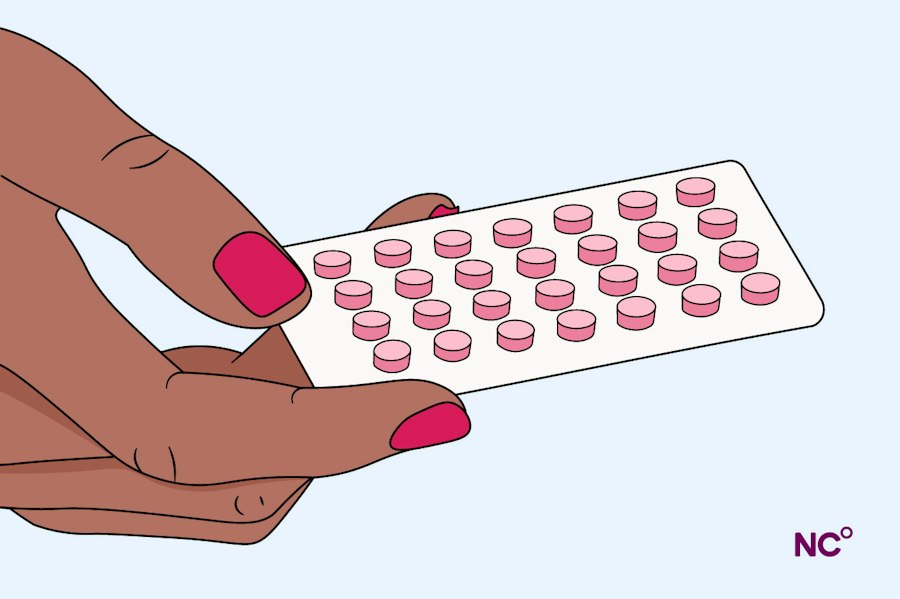
Progesterone and combination hormonal therapies can take several forms, depending on the type you are taking and what it’s prescribed for. Oral progesterone, such as the mini pill, comes as a pill that you swallow daily. Vaginal progesterone is inserted directly into the vagina (or, sometimes, the rectum) either as a gel, pessary, or tablet. Hormonal IUD contraceptives are fitted inside the uterus by a trained medical professional and stay in place for three to eight years [15]. Progesterone can also be given by injection into the skin or muscle, and transdermal progesterone is absorbed through the skin as a cream or patch [16, 17]. Your doctor can suggest a progesterone form and dosage based on your symptoms, medical history, and fertility goals.
Progesterone vs progestin
If you are taking a progesterone treatment, you might notice your medication contains progestin, rather than progesterone. Progesterone is a naturally occurring hormone, which can be reproduced in a lab for medications. You’ll often find it in the form of micronized progesterone, which is chemically the same as the natural hormone, but optimized to improve absorption [2].
Progestin, on the other hand, is a synthetic hormone that mimics progesterone in the body [18]. Both progesterone and progestin are effective in medication and widely considered safe, but it is helpful to understand the difference. In this article, we will use the term “progesterone”, but it may refer to natural progesterone, synthetic progesterone, or both.
How do you know if progesterone is working?
Knowing whether progesterone is working or not depends on why you're taking it. If you are taking hormonal birth control, you may notice changes in your cycle, such as more regular cycles, a change in how heavy your periods are, or side effects like breakthrough bleeding [4, 5]. If you are taking progesterone to manage symptoms of PMS or perimenopause, you should look out for a decrease in the severity of your symptoms. For IVF support, your doctor can monitor your progesterone levels.
How long does progesterone take to work?
How quickly progesterone works varies for everyone, and absorption can be influenced by the type of progesterone, age, whether you have eaten, and how you take it. Research on oral micronized progesterone, at a dosage of 100-300 mg, found that blood concentration levels peak around two to three hours after ingestion. Levels stayed high for 12 hours and remained above baseline levels after 24 hours [2]. In another study on the hormonal IUD found that progesterone was detectable in the bloodstream within 15 minutes, and blood levels stabilized within a few weeks [19]. But how quickly you notice a difference in your symptoms, or whether progesterone will be effective on a practical level, can depend on why you are taking it.
For example, if you are taking the progesterone-only mini pill as a contraceptive, how quickly you can rely on it for protection from pregnancy depends on when in your cycle you start taking it. If you take it within the first five days of your cycle, you don’t need to use any additional contraception. If you start taking it more than five days into your cycle, you’ll need to use additional contraception for two days [5].
If you are taking progesterone as part of hormone therapy for perimenopause, sometimes it can take a while to notice the effects. For example, with some HRT treatments, you may notice a change in your symptoms within a few days or weeks, whereas with other treatments, it can take up to three months [20, 21].
Whatever your reason for taking it, your doctor can explain how progesterone works as part of your treatment and how long you’ll need to wait for it to be effective.
How long does progesterone stay in your system?
How long progesterone stays in your system depends mostly on how you take it. Daily pills are cleared within hours to a few days after your last dose — which is why missing a pill can quickly affect how well it works) [2]. Hormonal IUDs and implants release a steady low dose, and levels drop soon after they’re removed, so fertility usually returns quickly [22]. The birth control shot is different: it’s designed to last about three months, and it can take several months or up to a year for periods and fertility to return to normal after the last injection [23].
However, depending on why and how you are taking progesterone, your treatment may stop being effective much sooner. For example, if you miss taking the mini pill within three hours of your usual time, you might need to use additional contraception or abstain from sex for two days [5]. Always follow your doctor's advice about when to take your medication and what to do if you miss a dose.
Progesterone side effects
Progesterone can cause side effects, depending on the dosage and type you are taking. The most common side effects include headaches, nausea, breast tenderness, breakthrough bleeding, changes to your period (for example, having lighter bleeding than usual) [4, 5]. Speak to your doctor if you are worried about side effects or if they are interrupting your day-to-day life.
When to see a doctor
It is important to speak to your doctor if you are starting to experience perimenopause symptoms, suffer from severe PMS, have any fertility concerns, or notice that your cycle is irregular. They can then determine if you have any underlying conditions that need to be addressed and find the best treatment plan for you. Make sure you tell your doctor about fertility goals, medical conditions, and personal preferences, too. Once you start treatment, let your doctor know if you don’t think the medication is working or if you're struggling with side effects, as they may be able to prescribe alternatives.
Take control of your menstrual health
No matter what stage of life you are in, Natural Cycles’ mission is to empower all women. The NC° app is more than a cycle tracker — it uses your unique cycle information, temperature data from your chosen wearable, and our specialized algorithm to predict ovulation and your fertile window. You can easily log information like perimenopause symptoms or PMS throughout your cycle to spot patterns or changes over time.
At the end of each cycle, your Cycle Summary will outline whether or not you ovulated, how long your cycle and period were, and what symptoms you recorded. You can download this information as a Cycle Report PDF and share it with your doctor to support conversations about treatment and your reproductive health more broadly. Whether you’d like support with conceiving, want to learn about your cycle, ovulation, and symptoms, or are looking for perimenopause support, find out how Natural Cycles can help you.
Did you enjoy reading this article?
Frequenty asked questions